










Breaking News
 Alex Jones Show – The Iconic G. Edward Griffin Issues An EMERGENCY WARNING:
 Watch leaked secret video of Charlie Kirk naming true Turning Point successor...
 Government scientist leaks terrifying truth about Google's plan to unleash 64 MILLION infected..
 Susie Wiles to quit White House: Insiders claim Trump's chief of staff is 'drained' by c
Top Tech News
 World's longest-range airliner takes to the skies
 Batteries That Use Sodium Instead of Lithium Could Be Low-Cost Rival to Tesla's
 Elon and SpaceX Have Made AI Training 10 Times Faster
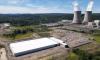 Oklo COO Says Nuclear Waste Could Power America For 150 Years
 SpaceX Announces LARGEST Starship Mission Ever! They've never done this before!
 Cars Are Fast Becoming Dystopian Prison Pods...
 Our Emergency Water Plan Wasn't Good Enough - So We Built This
 Sodium Ion Batteries Can Reach 100 Gigawatt Per Hour Per Year Scale in 2027
 Juiced Bikes proves capable electric motorcycles don't have to cost a lot
 Headlight projectors turn your car into a drive-in theater


Section 301 'Forced Labor' Tariffs Would Dangerously Expand Executive Power
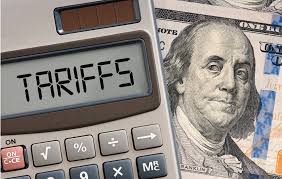
The Trump Administration has proposed coercive new tariffs that would not only raise costs during a national affordability crisis, but would also set a dangerous precedent for executive power.
The new tariffs of 10 percent to 12.5 percent would be imposed on Americans who import goods from countries that allegedly fail to take adequate action against the use of forced labor. It has been illegal to import goods made with forced labor since 1930, as USTR acknowledges. The new tariffs, which would apply to countries that provide 99.4 percent of US imports, would be based on whether other countries maintain and enforce similar measures.
The proposed tariffs, imposed under Section 301 of the Trade Act of 1974, are remarkably similar in scope to the Trump Administration's illegal 10.8 percent International Emergency Economic Powers Act (IEEPA) tariffs and its illegal 10 percent Section 122 tariffs.
IEEPA tariffs were imposed because the United States allegedly faces a national economic emergency. Section 122 tariffs were imposed because the United States allegedly faces fundamental international payments problems. Section 301 tariffs have been proposed in response to foreign policies regarding forced labor that are allegedly unreasonable and burden US commerce.
Despite the three different justifications, the ultimate tariff actions are nearly identical. But the newly proposed Section 301 tariffs are particularly dangerous.
Section 301 actions can be either mandatory or discretionary. Mandatory actions include measures designed to address foreign actions that are unjustifiable or that violate our trade agreements. These measures must be roughly proportional to the foreign restriction imposed on the United States.
Discretionary actions include measures designed to respond to foreign actions that are unreasonable or discriminatory and that burden or restrict US commerce. There is no explicit requirement for these measures to be commensurate with the burden imposed by foreign actions.
Either way, Section 301 tariffs are intended to secure the removal of foreign barriers, not to impose long-term tariff increases on Americans. President Trump and former US Trade Representative (USTR) Robert Lighthizer imposed the biggest Section 301 tariffs in history to encourage China to modify its investment and intellectual property policies during President Trump's first term. Unfortunately, those tariffs failed to achieve their stated goals. The tariffs were supposed to expire after four years, but the Biden Administration took the unprecedented action of extending them, and the Trump Administration is now considering whether to extend them again.