










Breaking News
 Alex Jones Show – The Iconic G. Edward Griffin Issues An EMERGENCY WARNING:
 Watch leaked secret video of Charlie Kirk naming true Turning Point successor...
 Government scientist leaks terrifying truth about Google's plan to unleash 64 MILLION infected..
 Susie Wiles to quit White House: Insiders claim Trump's chief of staff is 'drained' by c
Top Tech News
 World's longest-range airliner takes to the skies
 Batteries That Use Sodium Instead of Lithium Could Be Low-Cost Rival to Tesla's
 Elon and SpaceX Have Made AI Training 10 Times Faster
 Oklo COO Says Nuclear Waste Could Power America For 150 Years
 SpaceX Announces LARGEST Starship Mission Ever! They've never done this before!
 Cars Are Fast Becoming Dystopian Prison Pods...
 Our Emergency Water Plan Wasn't Good Enough - So We Built This
 Sodium Ion Batteries Can Reach 100 Gigawatt Per Hour Per Year Scale in 2027
 Juiced Bikes proves capable electric motorcycles don't have to cost a lot
 Headlight projectors turn your car into a drive-in theater


Taiwan racing to arm itself as US reliability wanes
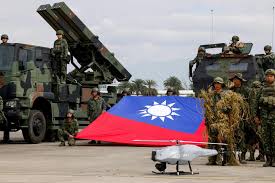
With the US increasingly distracted by the Iran war and China becoming more assertive, Taiwan is reshaping its defenses for a more uncertain era.
This month, Reuters reported that Taiwan is executing a major strategic defense shift by dramatically expanding its anti-ship missile arsenal to more than 1,800 weapons by early 2029 to counter the mounting threat of a Chinese blockade or invasion.
This massive stockpiling initiative relies heavily on acquiring 400 advanced US-made Harpoon cruise missiles, with full delivery scheduled between 2026 and March 2029, alongside the mass production of roughly 1,000 domestic Hsiung Feng II and III missiles.
By dispersing these precision, sea-skimming weapons across mobile, ground-based launchers, Taiwan's military aims to implement an asymmetric "kill zone" strategy within the highly contested Taiwan Strait.
Inspired by Ukraine's successful naval drone strikes against Russia and Iran's resilience under bombardment, the strategy focuses on inflicting devastating initial losses to shatter a Chinese invasion fleet's landing capabilities rather than attempting to destroy the entire People's Liberation Army Navy (PLAN).
To effectively synchronize this surge in coastal firepower and aerial drones, Taiwan will officially inaugurate a unified Littoral Combat Command in July, a structural overhaul engineered to stall invading forces long enough for allied nations to intervene during a prolonged war of attrition.
As Taiwan accelerates its shift toward asymmetric defense, the key question is whether an indigenous, missile-centric deterrent can compensate for growing uncertainty over the reliability and availability of US military support.
Taiwan's push to acquire more anti-ship missiles comes on the heels of the US Trump Administration's decision to pause a US$ 14 billion arms package to Taiwan.
Acting US Navy Secretary Hung Cao mentioned at a May 2026 US Senate Armed Services Committee hearing that the pause is intended to ensure the US has enough weapons for its Iran war effort. However, Cao stressed that foreign military sales will continue when the US Trump Administration deems necessary.
According to Rush Doshi and David Sacks in a May 2026 Council for Foreign Relations (CFR) article, the pause could affect the sale of Patriot PAC-3 interceptors, National Advanced Surface-to-Air Missile Systems (NASAMS), and TOW and Javelin anti-tank missiles.
Looking at US interceptor expenditure rates during the Iran War, Will Smith and Michael Cohen note in a May 2026 Stimson article that in the first two days of the war, the US fired about 1,300 Patriot interceptors, representing up to 60% of its stockpiles and over two years of production at 2025 rates.
Smith and Cohen also add that it may take two to three years to replenish Patriot and other interceptor stocks, creating a window of vulnerability for a potential conflict in the Western Pacific. That vulnerability may also have factored into the Trump Administration's calculus regarding Taiwan.
"I'm not looking to have somebody go independent. And, you know, we're supposed to travel 9,500 miles to fight a war. I'm not looking for that. I want them to cool down. I want China to cool down," US President Donald Trump said in a Fox News interview last month, potentially underscoring that vulnerability.