










Breaking News
 Something Is VERY WRONG With Silver
 What The Hell Is Going On With Beef? | Brooke Rollins #505 | The Way I Heard It
 WARNING: U.S. Mint Is SUSPENDING Silver Dealers
 Trump Just Admitted Unthinkable Dollar Reset (Most Don't Understand the Plan)
Top Tech News
 Most artificial limbs rely on silicone or plastic to mimic human hands.
 Flying cell tower beams phone signal to Japan from 10 miles up
 Chinese Commercial Reactor Achieves Nuclear Fusion with Clean Hydrogen-Boron Fuel
 Med Beds Just Took a MASSIVE Step Forward, Healing People in Days!
 Palmer Luckey: Autonomous Weapons Are Ancient and Why Anduril Won't Build Humanoids | EP #295
 A laser just photographed objects through six feet of concrete
 Elon Musk's Next-Gen Motor Destroy Entire EV Industry
 China's disputed satellite refueling heralds new space war era
 BYD Will Put Solid-State Batteries In An EV Next Year: Executive
 FDA-cleared exoskeleton puts spinal-cord patients back on their feet



Flying car industry turns to solid-state batteries for commercial takeoff
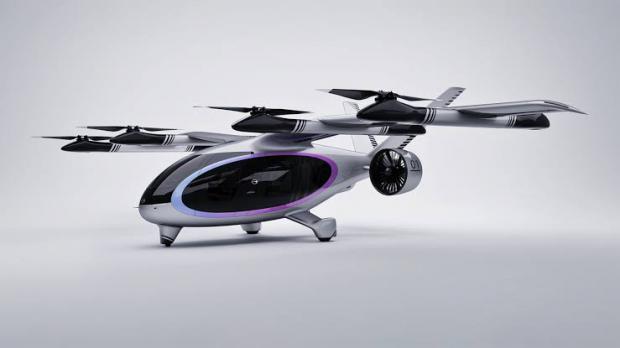
As the flying car industry moves from prototype development toward commercial deployment, attention is increasingly shifting to the technologies needed to support safe and scalable operations.
Su Qingpeng, founder and CEO of GAC Govy, a low-altitude mobility company incubated by GAC, recently described solid-state batteries as the "essential path" for the future of flying cars, highlighting their potential to deliver the energy density and safety required for aerial mobility.
At the same time, investor expectations are evolving. Rather than focusing primarily on technical specifications and performance claims, capital markets are placing greater emphasis on practical indicators of commercial success, including vehicle deliveries, profitability, production readiness, and the timeline for obtaining airworthiness certification.