










Breaking News
 one sweet kiss, and the funniest surprise! This golden lady moment is pure happiness!
 Trump, Xi and Putin hold rare 3-way talks on nuclear risks but emerge with no major breakthroughs
 The Society That Government Did Not Create
 US Air Force to turn Cold War B-1B bombers into a hypersonic missile carrier with Boeing
Top Tech News
 Extraterrestrial habitats may rise via Legos of laser-fused moon dust
 Battery-only 19-seater puts China in the electric airliner race
 Dream Chaser space plane gets landing approval for debut mission in 2027
 SpaceX Just Caught Starship on Its FIRST Attempt!
 Solid-State Cells Can Make The U.S. Competitive In Batteries Again: CEO
 Jetson ONE personal eVTOL pod is about to go full sky patrol
 America's INSANE BREAKTHROUGH Could Replace Septic Tanks Forever
 Amazing DIY Building Material for Home & Yard - Inexpensive and Easy!
 Researchers have discovered a massive deposit of hidden water...
 Amazon's Ring Unveils Flying Drone And Robot To Patrol Homes And Businesses



Extraterrestrial habitats may rise via Legos of laser-fused moon dust
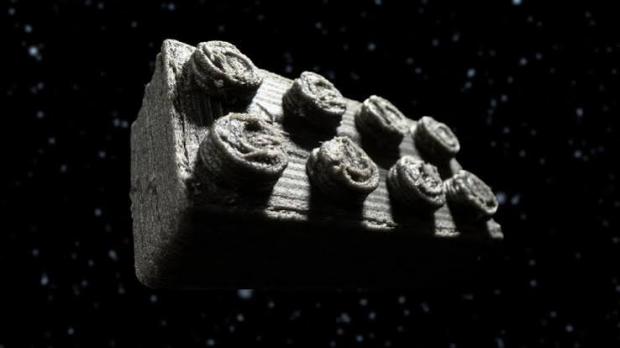
One of the key considerations in space travel is to keep the cargo load as light as possible, in order to minimize fuel consumption. So, needless to say, the last thing you want to be loading into a spaceship are a bunch of heavy sacks of cement.
That's why various groups of scientists have been looking into methods of building structures utilizing the regolith (lunar soil) which is already present on the surface of the Moon. The problem is, some of those methods still require a binding agent to be added to the regolith, and that substance still has to be brought along from Earth.
In an effort to use nothing but regolith, a University of Arkansas team led by assistant professor of mechanical engineering Wan Shou turned to 3D printing.
More specifically, the scientists turned to a type of 3D printing known as laser powder bed fusion. In a nutshell, this involves using a laser to selectively sinter powder that has been spread out in a flat bed. As that bed is gradually lowered and more powder is added, objects are progressively built up one layer of fused powder at a time.
Although metal powder is usually used in laser powder bed fusion, in this case the researchers swapped in Lunar Highlands Regolith Simulant, a commercially available material based on regolith samples collected during the Apollo missions.
It was found that even a relatively low-power laser was sufficient to sinter the simulant, allowing the team to print centimeter-scale Lego-like blocks that could be fitted together to form larger structures. And importantly, these blocks could be formed without any added binding agent.
"There's nothing else it's binding to. The regolith powder is binding to itself," says Cole McCallum, first author of the study.
That said, at this point the blocks do still have quite low compressive strength, sitting at 3.4 MPa (megapascals) – by contrast, residential concrete is around 25 MPa. Nonetheless, Shou is confident that once more research is conducted, the technology could have valuable applications in the microgravity environment of the Moon.