










Breaking News
 one sweet kiss, and the funniest surprise! This golden lady moment is pure happiness!
 Trump, Xi and Putin hold rare 3-way talks on nuclear risks but emerge with no major breakthroughs
 The Society That Government Did Not Create
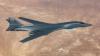 US Air Force to turn Cold War B-1B bombers into a hypersonic missile carrier with Boeing
Top Tech News
 Extraterrestrial habitats may rise via Legos of laser-fused moon dust
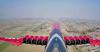 Battery-only 19-seater puts China in the electric airliner race
 Dream Chaser space plane gets landing approval for debut mission in 2027
 SpaceX Just Caught Starship on Its FIRST Attempt!
 Solid-State Cells Can Make The U.S. Competitive In Batteries Again: CEO
 Jetson ONE personal eVTOL pod is about to go full sky patrol
 America's INSANE BREAKTHROUGH Could Replace Septic Tanks Forever
 Amazing DIY Building Material for Home & Yard - Inexpensive and Easy!
 Researchers have discovered a massive deposit of hidden water...
 Amazon's Ring Unveils Flying Drone And Robot To Patrol Homes And Businesses



Battery-only 19-seater puts China in the electric airliner race
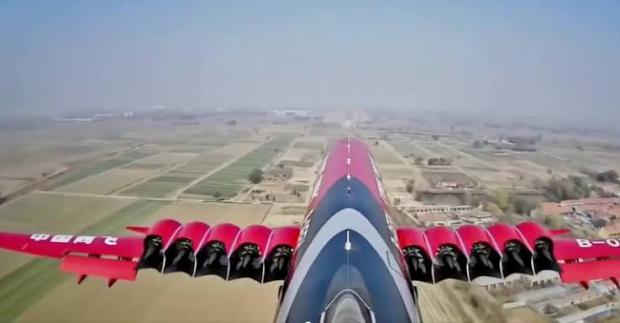
Flying with a crew was a crucial step toward winning regulatory approval and putting the world's first electric airliner into commercial service.
Electric aircraft certified so far have been smaller planes designed for training and light flying. The Pipistrel Velis Electro, a two-seater trainer, was approved by Europe's aviation regulator in June 2020, and China's four-seat RX4E got its seal at the end of 2024. Now China's aviation regulator has accepted COMAC's application for a CE-25A type certificate, the approval it needs to carry paying passengers.
According to state broadcaster CCTV, the "25" in CE-25A refers to CCAR-25, China's rules for transport-category aircraft. This means the plane will be held to the same safety requirements as large commercial jets. COMAC has cleared that bar before. Its C919, a single-aisle airliner with 158 to 192 seats, was certified against that rulebook in 2022 and has been carrying passengers since 2023.
The CE-25A's first crewed flight took off from Binzhou, in Shandong province, on November 14. CCTV said the whole test lasted 57 minutes and 46 seconds, with only 16 minutes and 38 seconds of it in the air, and covered 37.5 miles (60.4 km). CCTV called the outing the plane's first "crewed intelligent flight" and said it met all its targets, without explaining how much of the flying the automation handled. Before that, the plane had made 19 flights with nobody on board, the first of them on February 2, according to the Civil Aviation Administration of China (CAAC).
COMAC developed the aircraft with battery giant CATL, Shanghai Jiao Tong University and other domestic partners, although nobody has said who supplied what. Instead of propellers hanging off the wings, the CE-25A has 10 ducted electric fans: five along the top of each wing near the trailing edge, according to CCTV.
But details about the CE-25A are still scarce.
Thanks to the CAAC, we know it seats 19 passengers and has a maximum takeoff weight of 22,046 lb (10 metric tons), a cruise speed of 186 mph (300 km/h), a cruise altitude of 7,874 ft (2,400 m) and a range of 249 miles (400 km). However, none of those figures have been demonstrated in flight yet, and COMAC hasn't disclosed the battery capacity, chemistry, charging time or whether that range includes reserves. The company hasn't named any customers either.
Nineteen seats is still modest for an airliner, and going bigger on batteries alone has proved challenging. Heart Aerospace says its X1 demonstrator, built to the scale of a 30-seat airliner, is the largest all-electric plane to have flown. It weighed more than 25,000 lb (11,340 kg) at takeoff on its 27-minute maiden flight on August 12. But the X1 is a testbed, and in September Heart dropped the ES-30 it was built for in favor of a 36-seat hybrid-electric ES-36, due to enter service in 2031.