










Breaking News
 Poll Finds Strong Support For Larger Families Despite Falling US Birth Rates
 Houthis Declare "Total Ban" On Israeli Ships As Dual Chokepoint Crisis Stokes Supply Chain
 Former Biden J6 Prosecutor's ActBlue-Funded Firm Sues To Stop Trump's UFC White House Event
 Saylor's Strategy Buys The Dip As Bitcoin Nears Mining Cost Floor
Top Tech News
 World's longest-range airliner takes to the skies
 Batteries That Use Sodium Instead of Lithium Could Be Low-Cost Rival to Tesla's
 Elon and SpaceX Have Made AI Training 10 Times Faster
 Oklo COO Says Nuclear Waste Could Power America For 150 Years
 SpaceX Announces LARGEST Starship Mission Ever! They've never done this before!
 Cars Are Fast Becoming Dystopian Prison Pods...
 Our Emergency Water Plan Wasn't Good Enough - So We Built This
 Sodium Ion Batteries Can Reach 100 Gigawatt Per Hour Per Year Scale in 2027
 Juiced Bikes proves capable electric motorcycles don't have to cost a lot
 Headlight projectors turn your car into a drive-in theater


HOW TO GET FLOCK CAMERAS OUT OF YOUR COMMUNITY
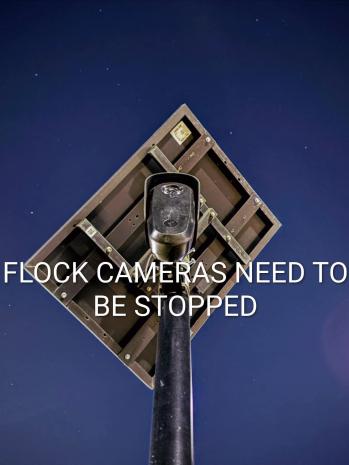
HOW TO GET FLOCK CAMERAS OUT OF YOUR COMMUNITY
A step-by-step guide for any neighborhood, town, city, county, or state.
Those small cameras on poles that photograph every license plate that drives by? Most are run by Flock Safety — a PRIVATE company. Here's the truth most people don't know, and exactly how communities across the country are getting them taken down.
FIRST, THE BIG QUESTION: WHO GAVE THEM PERMISSION?
In most places, nobody you voted for did. Flock is a private company — it needs no one's permission to build or sell cameras. Their entire "authority to operate" comes from one thing: the contract your local government signs with them. And here's the catch — in city after city, that contract was signed by a police chief or a city manager with NO public vote. No hearing. No notice. No chance for residents to object.
That means the cameras' right to exist usually rests on a single renewable contract. And a contract can be ended.
FOLLOW THE MONEY — THE FEE IS THE AUTHORITY
These cameras are not free. Your tax dollars — or grant money, or asset-forfeiture funds — pay an annual fee to Flock. That fee IS the authority to operate. No money, no contract, no cameras.
So two questions become very powerful, very fast:
How much are we paying, and out of which budget?
Who approved spending it — and did the public ever get to vote?
Ask those out loud, in public. Spending decisions are where elected officials are most accountable.
THE STEP-BY-STEP REMOVAL PLAYBOOK
This is the exact path communities have used to WIN.
STEP 1 — FILE A PUBLIC RECORDS REQUEST
Every state has a public records / "sunshine" law. Use it. Request:
The full Flock contract AND its expiration/renewal date — this is your deadline; everything keys off it
Whether an elected body voted to approve it, or an official just signed
The search audit logs
The data-sharing settings
STEP 2 — LOOK FOR THE RED FLAGS IN THE LOGS
This is your ammunition. Around the country, records have revealed:
Local data shared with federal agencies and out-of-state police
Searches logged for "immigration," or used to track people traveling for healthcare
Searches with NO documented reason or justification
Data kept far longer than the rules allow
One city's audit found that over 20% of searches lacked proper justification. Findings like these have flipped councils that were ready to renew.
STEP 3 — IDENTIFY THE DECISION-MAKER AND THE DEADLINE
Find out exactly who can end it — city council, county commission, or an elected sheriff. The renewal/expiration vote is your moment of MAXIMUM leverage. And if the contract was never voted on at all? Demand a public vote. That alone forces the scrutiny it never received.
STEP 4 — SHOW UP. IN NUMBERS.
This is what actually wins. Dozens of cities have ended their Flock programs after residents packed the meeting room. Organize your neighbors. Coordinate public comment. Bring signs. A room full of constituents at a renewal vote moves elected officials more than anything else you can do.
STEP 5 — KNOW THE EXIT TERMS BEFORE YOU PUSH
Some contracts penalize early cancellation — one city would have had to pay out a full multi-year term just to quit early. NON-RENEWAL at the natural expiration date usually avoids that penalty. Read the term first, then time your fight to the deadline.
STEP 6 — IF THE PROCESS WAS BROKEN, ESCALATE
No authorizing vote? No legally required public privacy policy? Data-sharing that violates a state law? That turns a political ask into a LEGAL one — a cease-and-desist letter, or a lawsuit.
And VERIFY the removal. In at least one city, cameras were taken down, quietly reinstalled without permission, and kept collecting data until a cease-and-desist forced them out for good. "Off" does not always mean gone.
STEP 7 — CHECK THE POLE PERMIT (A SEPARATE, EASIER FIGHT)
Here is a lever most people miss. Putting a pole on a public road is a DIFFERENT permission than running a surveillance program — and Flock has repeatedly skipped it.
Flock itself has no right to public land. To place a pole legally, the government must either mount the camera on infrastructure it already owns (a traffic-signal or streetlight pole) or pull a right-of-way / encroachment / utility-accommodation permit from whoever owns the road. And here is the key point: on a STATE highway, only the state Department of Transportation can issue that permit — a city or police contract does not reach state right-of-way at all.
So ask the road owner directly:
For a city or county road: ask the public-works department whether that specific pole has a valid right-of-way / encroachment permit.
For a state road or highway: ask the state DOT whether it issued a permit, and whether the pole meets breakaway, setback, and clear-zone safety standards.
Why this works: this fight is independent of the privacy debate. Communities have caught Flock installing cameras without the city's awareness (a "material breach"), and at least one state DOT halted all new installations in its right-of-way until it could write a proper policy, after poles went up without required documentation or safety review. If a pole sits in public right-of-way with no valid permit — or violates road-safety standards — the road authority can order it removed on pure infrastructure grounds. You never have to win the privacy argument. You just have to show the pole is not permitted or not compliant. That is often the fastest removal of all.
BOTTOM LINE
Nobody handed these cameras permanent authority. They run on a contract your government can simply refuse to renew — and communities everywhere are doing exactly that.
Find the deadline. Pull the records. Pack the room.
SHARE THIS so your neighbors know the cameras are optional — and removable.