









Breaking News
 Russia Hits Ukraine Power Plant Despite "Energy Ceasefire"
 Multi-material insulation delivers up to 10,000 x the stiffness
 Trump Just Started The Debt Spiral
 Look up...
Top Tech News
 Anduril's plan to save US sub edge from China's undersea surge
 Researchers Develop AI 'Mind-Reading' Tool That Reconstructs What Your Eyes See
 Video: Dexterous robot hand learns the delicate art of silk embroidery
 The computer that can read your mind:
 Seven apps. One craft
 SHOCK CASE REPORT: Advanced Alzheimer's Patient Regains Speech, Memory, Mobility...
 Most artificial limbs rely on silicone or plastic to mimic human hands.
 Flying cell tower beams phone signal to Japan from 10 miles up
 Chinese Commercial Reactor Achieves Nuclear Fusion with Clean Hydrogen-Boron Fuel
 Palmer Luckey: Autonomous Weapons Are Ancient and Why Anduril Won't Build Humanoids | EP #295



How to Get More Fruits and Vegetables in Your Prepper Stockpile
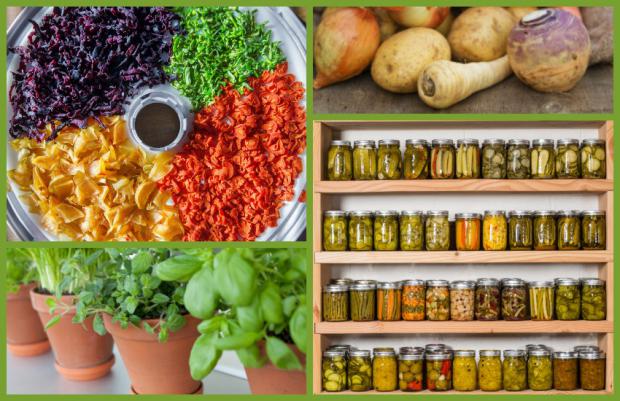
Most people who work hard to eat well consume a lot of fresh fruits and vegetables. As well, many people these days generally eat a low-carb diet that is reliant on protein and produce. One of the biggest issues those same people notice in their prepper is getting those same fruits and vegetables from a pantry.
A shortage of fruits and veggies in your diet is dangerous because, without produce, your family can be at risk for nutritional deficiency diseases like scurvy, and their immune systems will be compromised. A minimum of 5 servings per day is recommended, but during the long winter, how can you meet that goal with shelf-stable foods?
Supplying your family with produce that will provide the necessary nutrients that their bodies need to thrive is a twofold process. Not only should you preserve the summer's bounty for the winter ahead, but you should also come up with ways to add fresh greens outside of the growing season.
These suggestions are plucked from my book, Prepper's Pantry.
Building a Stockpile of Fruits and Vegetables
When creating your produce stockpile, you have to look at what actually constitutes a "serving" for the people you will be feeding. It may not actually be the amount that you expect. For example, a child's serving of green beans is anywhere from a quarter cup to a half a cup (depending on their age), but an adult's serving is a full cup. So for a child, plan on 1-3 cups of produce per day and for an adult, plan on 5 cups of produce per day.