










Breaking News
 CA's Print-at-Home Ballot Program Has a Transparency Problem & It's Begging...
 Israeli Navy Abducts Nine Fishermen Off the Coast of Gaza
Conviction of Jackson Co. man tied to Whitmer kidnap plot gets vacated
 The Purchasing Power Of The Dollar Has Collapsed And The Majority Of The Population...
Top Tech News
 Every hard drive you own will die.
 Flying car industry turns to solid-state batteries for commercial takeoff
 Thumbnail-sized thrusters could take CubeSats to Mars
 Tesla Discovered How to Destroy Disease With Sound. Then They Buried It.
 World's longest-range airliner takes to the skies
 Batteries That Use Sodium Instead of Lithium Could Be Low-Cost Rival to Tesla's
 Elon and SpaceX Have Made AI Training 10 Times Faster
 Oklo COO Says Nuclear Waste Could Power America For 150 Years
 SpaceX Announces LARGEST Starship Mission Ever! They've never done this before!
 Cars Are Fast Becoming Dystopian Prison Pods...


CA's Print-at-Home Ballot Program Has a Transparency Problem & It's Begging...
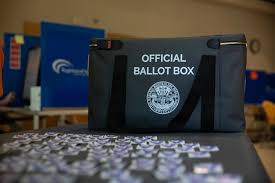
California has a ballot program called Remote Accessible Vote-by-Mail, or RAVBM, which is the polite bureaucratic way of saying that a voter can request access to a ballot online, mark the selections on a computer, print those selections at home, and return the paper to election officials by mail, drop box, vote center, or county office. The Secretary of State says the selections cannot be submitted online, which is supposed to reassure everyone because, as we all know, the moment a government process touches paper, all possible concerns magically evaporate into a cloud of institutional incense. The voter prints the marked selections, places them in a return envelope, signs the outside of the envelope, and sends it in like a normal vote-by-mail ballot. California's own RAVBM guidance says voters may use the postage-paid envelope included with their vote-by-mail ballot, or their own envelope if postage is provided, so long as the envelope is signed.
This program was originally sold as an accessibility tool, and to be clear, that need is real. Voters with disabilities, voters overseas, and military voters deserve the ability to cast a ballot privately, independently, and securely. That is not the issue. The issue is what happens when a program designed for narrow accessibility becomes a universal voting channel with weak public visibility and no voter-side verification after the ballot is transferred into the tabulation stream. A tool built for those with genuine barriers became, during the 2021 Gavin Newsom recall, available to every registered California voter under SB 152, regardless of whether that voter had a disability or was military or overseas. The state's own August 2021 memo said that for the recall election, every registered voter in California was eligible to use the accessible print-at-home ballotw system.
That is where the story got interesting, and by "interesting," I mean the sort of thing that makes election officials clutch their pearls while insisting the pearls are fully audited, chain-of-custody compliant, and definitely not available for public inspection. I broke that story in 2021, and for a few days it went everywhere. The Gateway Pundit wrote about it. Larry Elder, who was the leading Republican candidate in the recall replacement race, posted about it. Then I received a call from an organizer of the recall Newsom movement who told me to knock it off because I was going to suppress the vote. He assured me the race was extremely close, that Democrats were too stupid to steal elections, and that when all was said and done it would be 51-49. I told him they were not going to allow the public to think the recall had real momentum, because momentum is dangerous when the people start believing they are allowed to govern themselves. I said they would use the system to make it look like we never had momentum at all, and I predicted the outcome would land around the same 65-35 psychological neighborhood where California had already parked Trump against both Clinton and Biden. He blew me off, which is the traditional California Republican leadership strategy right before asking donors for more money.