










Breaking News
 Has the African Century Begun?
 Is the Ceasefire Dead?
 In 2025, 31 Million (8.9%) Americans Actually Took a COVID-19 Booster
 Why Those in Political Power Are in a Hurry
Top Tech News
 Every hard drive you own will die.
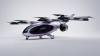 Flying car industry turns to solid-state batteries for commercial takeoff
 Thumbnail-sized thrusters could take CubeSats to Mars
 Tesla Discovered How to Destroy Disease With Sound. Then They Buried It.
 World's longest-range airliner takes to the skies
 Batteries That Use Sodium Instead of Lithium Could Be Low-Cost Rival to Tesla's
 Elon and SpaceX Have Made AI Training 10 Times Faster
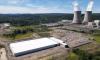 Oklo COO Says Nuclear Waste Could Power America For 150 Years
 SpaceX Announces LARGEST Starship Mission Ever! They've never done this before!
 Cars Are Fast Becoming Dystopian Prison Pods...


Historic drone rescue of Apache crew points to future of recovery missions
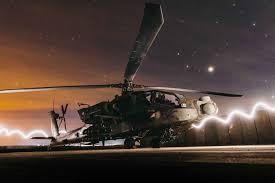
Details of the incident remain sketchy, including whether the Apache ditched due to a mechanical failure or hostile action. What is known is that, at 11:33 GMT on June 8, 2026, the attack helicopter encountered trouble while on a routine patrol near the Strait of Hormuz. A recovery effort was launched by US Naval Forces Command and the 82nd Airborne Division, with support from US Air Force and Navy units.
What made the operation unusual was the involvement of Task Force 59, a dedicated artificial intelligence and unmanned systems integration unit that operates a flotilla of drone boats, including the Corsair. Equipped with a 360-degree passive sensing payload, the vessel was able to locate the two crew members, who were able to climb aboard the 24-ft (7.3-m) drone boat and cling onto its superstructure as the surface craft carried them to a safe area for helicopter extraction. Both were reported to be in stable condition after their ordeal.
This first-of-its-kind rescue is significant for more than its historic value. It also highlights a potentially important application of drone technology for both military and disaster-relief missions.
Casualty evacuation has always posed a major challenge for armed forces, particularly Western militaries dedicated to the principle of leaving no one behind. It's a laudable concept, but one that has caused problems in the past. At the very least, it means using up soldiers to move wounded comrades to the rear, meaning that at least two fit people are needed to handle one casualty. Even with dedicated stretcher bearers, that's a lot of personnel.
It can also cause serious operational problems. During the Vietnam War, the Viet Cong learned that they could bring an American assault crashing to a halt by wounding a US soldier as quickly as possible, stopping the attack while the casualty was dealt with. By the time of the Falklands War, the British learned from this and adopted the policy of stabilizing a casualty and continuing the assault, with recovery taking place later when conditions allowed.
Autonomous drones – including land, sea, and air, as rescue and evacuation units – could change things dramatically. Many more soldiers could be freed up for combat and other operations while often costly rescue or recovery missions could be handled by autonomous vehicles.
Casualties could be moved to the rear quickly, helping preserve the critical "Golden Hour" during which prompt medical treatment can mean the difference between life and death. In addition, the drones could be sent into situations that would be too dangerous for a human team, increasing the chances of successful rescue.