










Breaking News
 Has the African Century Begun?
 Is the Ceasefire Dead?
 In 2025, 31 Million (8.9%) Americans Actually Took a COVID-19 Booster
 Why Those in Political Power Are in a Hurry
Top Tech News
 Every hard drive you own will die.
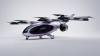 Flying car industry turns to solid-state batteries for commercial takeoff
 Thumbnail-sized thrusters could take CubeSats to Mars
 Tesla Discovered How to Destroy Disease With Sound. Then They Buried It.
 World's longest-range airliner takes to the skies
 Batteries That Use Sodium Instead of Lithium Could Be Low-Cost Rival to Tesla's
 Elon and SpaceX Have Made AI Training 10 Times Faster
 Oklo COO Says Nuclear Waste Could Power America For 150 Years
 SpaceX Announces LARGEST Starship Mission Ever! They've never done this before!
 Cars Are Fast Becoming Dystopian Prison Pods...


Why Those in Political Power Are in a Hurry

If it is a dictatorship, the tyrant in power can never be sure when an assassin's bullet might cut his life short, or if some of his "loyal" followers may be conspiring to overthrow him and replace him with one of their own.
The famous Italian classical-liberal historian Guglielmo Ferrero (1871–1942) explained more than once in the 1930s, particularly in The Principle of Power (1942), why the dictators that arose following the First World War were in a hurry. Lacking both the traditional legitimacy of the hereditary monarchs of the past or the more modern democratic legitimacy of acceptance by the many through a majority vote, they could create a less-stable legitimacy only by attempting to introduce great and impressive changes in society, that is, "great deeds" — bigger than life accomplishments of one sort or another to awe and impress "the masses" as legitimization of the dictators' right to rule. Their fear of assassination or revolution against their rule made them men in a hurry.
This is what the German free-market economist Wilhelm Röpke referred to in The Social Crisis of Our Time (1942) as the "Cult of the Colossal," that is, massive public works and industrial manufactures, huge government buildings and giant stadiums, and large mass rallies and demonstrations — all of which was meant to make the individual human being feel small and inescapably part of some social collective larger than himself, led by the dictator.
Dictators are always in a hurry
Dictators, for all their self-images of courage, leadership, vision, and commanding powers setting them aside and above those over whom they rule, are always afraid of death by an assassin's bullet. In 1918 and 1919, shortly after the Bolshevik Revolution in Russia, there were several assassination attempts on Vladimir Lenin's life, one of which seriously wounded him. Over the quarter of a century that Joseph Stalin was the unchallenged dictator of the Soviet Union, there were few real threats or attempts on his life. Nonetheless, constantly imagining that there were "enemies everywhere," Stalin carried out purges against prominent members of the Soviet Communist Party and in the senior ranks of the Soviet military in the 1930s. As a Sovietologist once noted, with a touch of irony, Stalin probably killed more communists in these purges than any anticommunist government in history!
The last of such purges was after World War II and centered around a group of Jewish doctors accused of planning to murder Soviet leaders in Stalin's circle, what came to be called "the doctor's plot." The only thing that prevented it from being fully set in motion with public executions in Red Square in Moscow and the exiling of millions of Soviet Jews to the country's desolate far east in Siberia was Stalin's death in March 1953, from seemingly natural causes (a stroke).