










Breaking News
 They Couldn't Afford Compost… So Woodchips Saved This Garden
 Stop Poisoning Your Soil: It's Worse Than You Think!
 The Economist Who Called 2008 Says The Debt Crisis Warning Is A Myth -- We Had To React
 The 'Projects' That Could Ignite The Next World War
Top Tech News
 Anthropic is launching its own drug discovery programs for rare diseases using Claude...
 SpaceX AI Satellites Will Have 250 Kilowatts of Power
 Chinese researchers have developed a sodium-metal battery that can fully charge in just 4 minutes...
 SpaceX Starship Flight 13 in 3 Days - Thursday July 13
 Chinese Scientists Develop Nuclear Battery Using Carbon-14
 Teleoperated humanoid robots complete first-ever live surgery
 Floating capsule auto-disinfects water without chemicals or battery
 Modular Reactors To Solve Data Center Hysteria?
 DeepSeek Developing In-House AI Chip In Bid To Cut Nvidia Reliance
 America just took three brand-new nuclear reactors critical in thirty days, a first for any...



Sodium Batteries And EVs That Power The Grid: Inside GM's Big Energy Push
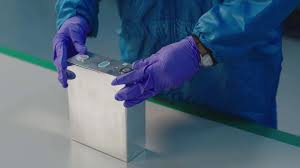
In addition to being America's largest automaker by sales, General Motors is becoming a burgeoning energy company.
At an event in San Francisco I attended on Tuesday, GM said it's developing sodium-ion batteries for energy storage systems (ESS). It also wants to connect 52,000 EVs to the grid by the end of the decade and make EV charging dramatically simpler for owners with a new tool called Energy Pass, which consolidates charging and payments across major networks into a single app.
GM's Bet On Sodium-Ion Batteries
But first, let's talk about sodium-ion. GM's broader battery strategy has branched out under Kurt Kelty, a Tesla veteran who serves as the automaker's vice president of battery and sustainability.
It has lithium iron phosphate (LFP) for affordable EVs like the Chevy Bolt and near-term energy storage projects, traditional high-nickel (NMC) cells for most current models, and the upcoming lithium-manganese-rich (LMR) chemistry to bring down costs on big electric trucks and SUVs. Sodium-ion is the newest addition to that lineup.
"We believe that you have to have the right battery for the right application," Kelty told me in an interview.
Why Car Companies Are Getting Into Energy Storage
EV sales have cooled in the U.S. now that federal tax credits have expired, and automakers that poured billions into domestic EV battery production are looking for somewhere else to put that capacity to work. Grid-scale energy storage is the obvious answer. Demand is enormous, driven largely by power-hungry AI data centers.
ESS batteries can store surplus renewable energy and release that energy when demand spikes. In this market, the race is on to deliver the best battery at the lowest cost, with minimal maintenance and a long service life.