










Breaking News
 They Couldn't Afford Compost… So Woodchips Saved This Garden
 Stop Poisoning Your Soil: It's Worse Than You Think!
 The Economist Who Called 2008 Says The Debt Crisis Warning Is A Myth -- We Had To React
 The 'Projects' That Could Ignite The Next World War
Top Tech News
 Anthropic is launching its own drug discovery programs for rare diseases using Claude...
 SpaceX AI Satellites Will Have 250 Kilowatts of Power
 Chinese researchers have developed a sodium-metal battery that can fully charge in just 4 minutes...
 SpaceX Starship Flight 13 in 3 Days - Thursday July 13
 Chinese Scientists Develop Nuclear Battery Using Carbon-14
 Teleoperated humanoid robots complete first-ever live surgery
 Floating capsule auto-disinfects water without chemicals or battery
 Modular Reactors To Solve Data Center Hysteria?
 DeepSeek Developing In-House AI Chip In Bid To Cut Nvidia Reliance
 America just took three brand-new nuclear reactors critical in thirty days, a first for any...



The 'Projects' That Could Ignite The Next World War
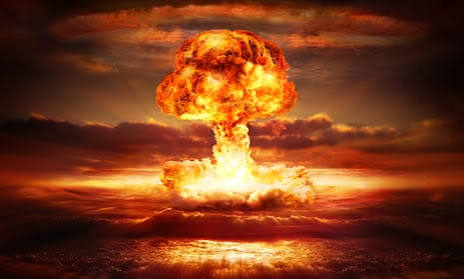
Across Europe, the Indo-Pacific and the Middle East, governments are committing extraordinary resources to military production, strategic infrastructure, weapons procurement and long-term defence planning, creating a global security environment in which preparation for war has itself become one of the defining features of international politics. The official justification is almost always deterrence: stronger armies are supposed to prevent aggression, larger stockpiles are supposed to make adversaries think twice and new military infrastructure is supposed to close the gaps that might otherwise invite attack. Yet deterrence has an inherent paradox. Every military capability built by one state is examined by another as a potential threat, and every response can then be used to justify another round of preparation. What emerges is not necessarily an organized march toward a single global conflict, but something more unstable: a collection of increasingly sophisticated military projects operating simultaneously across several regions, each designed to prevent war while potentially making the consequences of miscalculation far more severe.
The scale of this transformation is no longer a matter of speculation. According to the Stockholm International Peace Research Institute, global military expenditure reached approximately $2.887 trillion in 2025, marking the eleventh consecutive year of growth. European military spending increased by 14% to approximately $864 billion, while military expenditure in Asia and Oceania rose by 8.1% to around $681 billion. The United States remained the world's largest military spender at approximately $954 billion, followed by China at $336 billion and Russia at $190 billion. Together, those three countries accounted for roughly 51% of global military expenditure. SIPRI also reported that European NATO members increased spending sharply, while China's military expenditure continued a decades-long upward trajectory and Taiwan increased its own military spending by approximately 14% in 2025. These figures do not prove that a world war is approaching, but they reveal an international system in which the largest military powers are simultaneously expanding or restructuring their strategic capabilities.
The "Editorial risk assessment" is an analytical classification based on escalation potential, proximity of military forces, strategic importance and likelihood of involvement by major powers. It is not an official probability forecast. Data on military expenditure: SIPRI. Current developments in Taiwan Strait and the Middle East: Reuters and AP.
The most important feature of this table is not any individual number, but the simultaneous concentration of military pressure across several theatres. Europe is rebuilding defence capacity at a pace unseen in decades, China is continuing its military modernization while applying pressure around Taiwan, Russia remains heavily committed to wartime spending, and the United States is attempting to maintain strategic commitments across Europe, the Middle East and the Indo-Pacific. This creates a geopolitical environment in which a crisis in one region could consume resources, attention and military capacity that are simultaneously required elsewhere. The risk is therefore not simply that one country decides to start a global war; it is that several regional crises could interact with one another at precisely the moment when governments have fewer diplomatic and military resources available to contain them.