










Breaking News
 Russia Hits Ukraine Power Plant Despite "Energy Ceasefire"
 Multi-material insulation delivers up to 10,000 x the stiffness
 Trump Just Started The Debt Spiral
 Look up...
Top Tech News
 Anduril's plan to save US sub edge from China's undersea surge
 Researchers Develop AI 'Mind-Reading' Tool That Reconstructs What Your Eyes See
 Video: Dexterous robot hand learns the delicate art of silk embroidery
 The computer that can read your mind:
 Seven apps. One craft
 SHOCK CASE REPORT: Advanced Alzheimer's Patient Regains Speech, Memory, Mobility...
 Most artificial limbs rely on silicone or plastic to mimic human hands.
 Flying cell tower beams phone signal to Japan from 10 miles up
 Chinese Commercial Reactor Achieves Nuclear Fusion with Clean Hydrogen-Boron Fuel
 Palmer Luckey: Autonomous Weapons Are Ancient and Why Anduril Won't Build Humanoids | EP #295



Our bodies may be able to regrow lost limbs after all
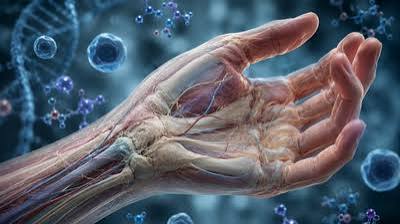
Or perhaps we do. An experiment on mice conducted by a team of researchers from Texas A&M University has revealed a healing sequence in mammalian physiology that rebuilds lost skeletal structure, albeit with less than perfect results.
The discovery may not give us the tools to return whole fingers, arms, or legs to amputees any time in the near future, but it just might give us a better idea of what our bodies are working with when recovering from traumatic injuries.
"People should start thinking about using these signals during the healing process," says senior author Ken Muneoka, a developmental biologist at the Texas A&M College of Veterinary Medicine and Biomedical Sciences. "Even shifting the response slightly away from scarring could have real benefits."
Destruction of mammalian tissues typically triggers a complex mix of responses from the immune and repair systems. Platelets in the blood form clots, white cells are summoned, dead cells are cleared away, and a cascade of chemical signals sounds the alarm to draw in units known as fibroblasts.
These specialized cells multiply and close up wounds to reduce the risk of infection, threading the site with stiff strings of collagen and fibronectin for extra support.
What the process gains in speed and efficiency, it loses in regenerative flexibility, choosing a path of rapid scar-growth over the creation of a regenerative nub of tissue called a blastema.
"It's as if these cells can move in two different directions," says Muneoka. "They could either make a scar or make a blastema. Our research focused on redirecting the behavior of fibroblasts already present at the injury site."
To determine whether a healing wound could still produce a blastema in mammals, Muneoka and his team artificially applied fibroblast growth factor 2 (FGF2) to the closed stumps of amputated mouse digits.
Sure enough, tissue that resembled a blastema formed. While the cells failed to differentiate into new skin and bone, the change demonstrated that the regenerating process didn't necessarily hit a dead end in mammals.
Next, the researchers added a tiny bead containing bone morphogenetic protein 2 (BMP2), forcing the blastema to produce new pieces of bone, ligament, and tendon tissue.