










Breaking News
 Can We Stop The Military Merger With Israel? With Guest Dennis Kuciinich
 Farming Small & Growing Big
  XMPP: A Forgotten King of Privacy in Messaging
 Is the Gold Market Manipulated? Can China Shut Down the Paper Gold Market?
Top Tech News
 DeepSeek Developing In-House AI Chip In Bid To Cut Nvidia Reliance
 America just took three brand-new nuclear reactors critical in thirty days, a first for any...
 Your brain doesn't peak in your 20s after all: Study reveals your mind is at its sharpest betwee
 Compasses, not maps: China is building a different type of AI
 The Return of the Ekranoplan
 Farewell, atom-smashing Large Hadron Collider
 This is already starting.
 The Crosley IcyBall
 It's Not a Conspiracy Anymore: Med Beds Exist and Trump Knows It
 A SINGLE dose of a newly discovered frog gut bacterium...


Activists Push California To Recognize 'Black English' In Preschool Classrooms
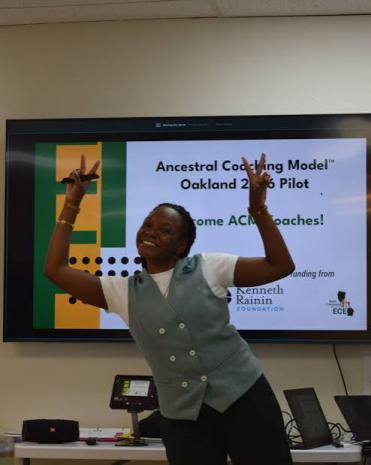
Black Californians United for Early Care & Education (BlackECE), a nonprofit advocacy organization, is promoting what it describes as an effort to challenge "harmful language hierarchies and affirm black English as a legitimate, rule-governed language rooted in black history, culture, and community."
The group also seeks to "address how language bias shows up in early learning spaces–and how it can be dismantled."
Ashley Williams, a co-founder of BlackECE, said the initiative is intended to ensure children feel their voices are respected regardless of how they speak.
"I don't want my son to walk into any room and feel like his voice is not valued or his perspective can't be heard because he's not saying it one way or the other," Williams told PBS.
Williams also reflected on her own experiences, saying speaking black English came with embarrassment because of its slang and grammatical differences.
She said she often felt pressure to "talk white" instead of speaking in the way that felt most natural to her.
BlackECE has developed a 10-point policy agenda focused on black children, families and educators, including proposals related to reparations and early childhood education.
The organization's campaign follows California's 2020 plan encouraging early dual-language learning and support for bilingual children. BlackECE argues that black English should also be recognized as part of those efforts.
"We talk about multilinguals, but we don't include black children who may be African-American English speakers," Xigrid Soto-Boykin, director of the Children's Equity Project, said.
According to research cited from the National Library of Medicine, about 20 percent of American children and 44 percent of California children ages 5 to 17 are bilingual. The information also states that 89 percent of African Americans speak only English at home.