










Breaking News
 The Junior Miner's Long Walk through Holes and Headlines
 World's first: Therapy to make cells young again trialled in a person
 On Organized Crime
 In 2015 Carl Icahn told Larry Fink to his face that BlackRock is "an extremely dangerous compan
Top Tech News
 DeepSeek Developing In-House AI Chip In Bid To Cut Nvidia Reliance
 America just took three brand-new nuclear reactors critical in thirty days, a first for any...
 Your brain doesn't peak in your 20s after all: Study reveals your mind is at its sharpest betwee
 Compasses, not maps: China is building a different type of AI
 The Return of the Ekranoplan
 Farewell, atom-smashing Large Hadron Collider
 This is already starting.
 The Crosley IcyBall
 It's Not a Conspiracy Anymore: Med Beds Exist and Trump Knows It
 A SINGLE dose of a newly discovered frog gut bacterium...


CSIS Secret Federal Court Warrants: Enabling Zersetzung Through Breaches of Candor
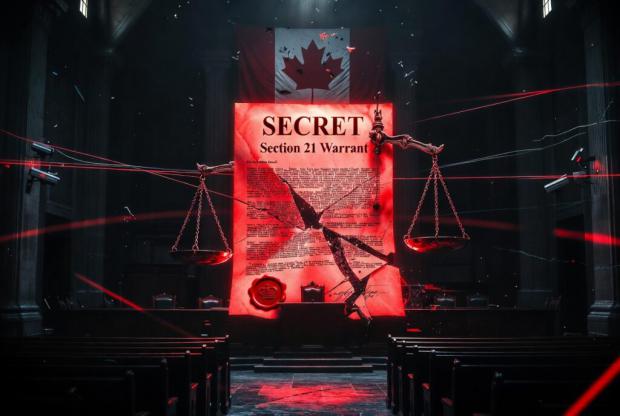
In exchange for this extraordinary power, CSIS and the Department of Justice owe the Court a heightened duty of candor — the obligation to provide full, frank, complete, and transparent disclosure of all material facts, including those that might weaken or undermine the warrant application.
When this duty is breached, judges authorize surveillance, data collection, or disruptive measures based on incomplete or misleading information. In the context of alleged Zersetzung — modern psychological harassment, sabotage, financial warfare, reputational attacks, and "neutralization" operations designed to destroy a target without laying formal charges — these secret warrants become an ideal covert mechanism. They provide legal cover while the target is left in the dark, often attributing events to "bad luck," paranoia, or personal failure.
The public record reveals a disturbing, repeated pattern: CSIS has been repeatedly cited by Federal Court judges for breaching its duty of candor. Judges have expressed growing exasperation, describing institutional failings, cavalier attitudes toward the rule of law, and a troubling history of omissions.
2016 FC 1105: The ODAC Data Retention Scandal
In X (Re), 2016 FC 1105, Justice Simon Noël delivered a strongly worded judgment concerning CSIS's Operational Data Analysis Centre (ODAC). CSIS had been collecting and retaining vast amounts of "associated data" (metadata and other information linked to individuals who posed no threat to national security) for over a decade without properly disclosing the program to the Court.