










Breaking News
 The Japanese Yen is at its lowest level since 1986 against the US Dollar, losing 54% of its value...
 TINA PETERS: "JUST SAY YOU LIED." SHE REFUSED.
 JUST IN: Wells Fargo, the $2.5 TRILLION Wall Street giant, just revealed...
 Turkey's Erdo?an gives NATO leaders a handgun conundrum after summit
Top Tech News
 Modular Reactors To Solve Data Center Hysteria?
 DeepSeek Developing In-House AI Chip In Bid To Cut Nvidia Reliance
 America just took three brand-new nuclear reactors critical in thirty days, a first for any...
 Your brain doesn't peak in your 20s after all: Study reveals your mind is at its sharpest betwee
 Compasses, not maps: China is building a different type of AI
 The Return of the Ekranoplan
 Farewell, atom-smashing Large Hadron Collider
 This is already starting.
 The Crosley IcyBall
 It's Not a Conspiracy Anymore: Med Beds Exist and Trump Knows It



WSJ: "Fight Over Hormuz Boils Down to One Poorly Worded Clause in Trump's Deal"
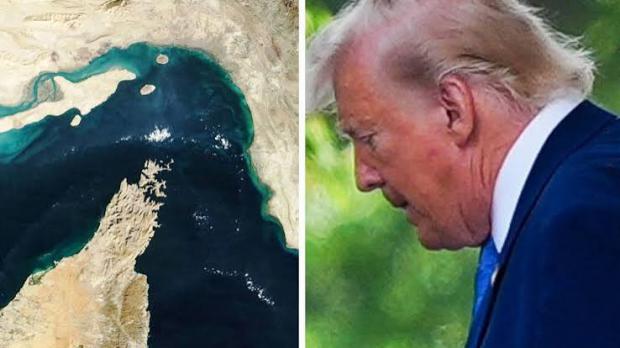
Paragraph 5 of the MOU gives Iran the power to arrange shipments through the strait. But, an analysis from The Wall Street Journal avers, Iran and the United States differ in their understanding of what that means.
Iran interprets that codicil in the most favorable way imaginable by asserting, as a practical matter, that Iran controls the Strait.
The MOU
Signed June 17, the MOU's fifth paragraph opens thusly:
Upon the signing of this MOU, the Islamic Republic of Iran will make arrangements using its best efforts for the safe passage of commercial vessels with no charge, for 60 days only, from the Persian Gulf to the Sea of Oman and vice versa.
In other words, neither the United States nor any other nation will arrange for safe shipping to begin.
Granted, Paragraph 5 says "Iran will conduct dialog with the Sultanate of Oman to define the future administration and maritime services in the Strait of Hormuz in discussion with other Persian Gulf littoral states in line with the applicable international law and the sovereign rights of coastal states of the Strait of Hormuz."
But the immediate future after the signing envisioned Iran in charge.
"The U.S. and its Arab Gulf allies don't want Iranian hegemony over Hormuz, the lifeline for much of the world's oil and gas supply," the Journal reported:
The language of the deal has left the two sides fighting over that point rather than making progress on a final agreement on Tehran's nuclear program.
"This gap in interpretation is wide, baked into the deal, and not exactly surprising," said Michael Horowitz, an Israeli geopolitical analyst. "Washington has tried to convince Tehran that compliance would be more profitable, but this framing misses the point. Iran's behavior isn't driven by financial motives but by security concerns and bargaining leverage. It's a power dynamic."