










Breaking News
 'KICKBACK' SCHEME: Nick Shirley EXPOSES alleged NYC senior daycare center fraud
 Oil prices are in free fall and could keep going to $40. Which implies $2 gasoline.
 Can 'Spaceballs 2' Be As Good As Its Marketing Campaign?
 He Risked Everything To Warn You: No One Is Ready For What's Coming...
Top Tech News
 Modular Reactors To Solve Data Center Hysteria?
 DeepSeek Developing In-House AI Chip In Bid To Cut Nvidia Reliance
 America just took three brand-new nuclear reactors critical in thirty days, a first for any...
 Your brain doesn't peak in your 20s after all: Study reveals your mind is at its sharpest betwee
 Compasses, not maps: China is building a different type of AI
 The Return of the Ekranoplan
 Farewell, atom-smashing Large Hadron Collider
 This is already starting.
 The Crosley IcyBall
 It's Not a Conspiracy Anymore: Med Beds Exist and Trump Knows It



How Modern Medicine Made Your Bones Brittle
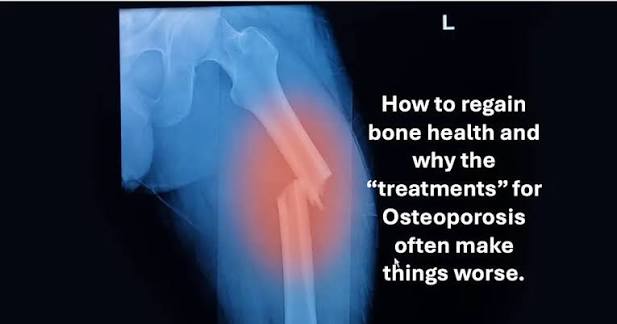
Story at a Glance
•A gradual weakening of the bones which predisposes one to fractures is one of the most common and significant consequences of aging. Presently, to address it, we wisely try to head off bone loss in our younger years and routinely scan the density of aging bones so that a large volume of patients can be sold drugs to increase bone density.
•This approach is misguided because the data from those scans often does not correlate to the actual strength of the bones and because simply increasing bone density often creates brittle bones that fracture under stress. Additionally, the most commonly used drugs to address bone density are notorious for their side effects.
•Remarkably, medicine's own data now shows that two-thirds of fractures happen to people who do not have osteoporosis, which means the number we have built this entire industry around is not the number that actually breaks bones.
•Anytime a large drug market exists (e.g., presently osteoporosis affects around 20% of women over 50), the medical industry will dismiss any approach to the condition which does not result in it being able to sell large amounts of lucrative medical services.