










Breaking News
 Bright Videos News, July 15, 2026 - Catastrophic Consequences To Follow Continued War...
 It Is Drug Users Who Are Killing Themselves
 'Really big news': What to know about Trump's primetime speech on Thursday
 Trump Leans Toward Expanding U.S. Military Operations in Iran
Top Tech News
 Modular Reactors To Solve Data Center Hysteria?
 DeepSeek Developing In-House AI Chip In Bid To Cut Nvidia Reliance
 America just took three brand-new nuclear reactors critical in thirty days, a first for any...
 Your brain doesn't peak in your 20s after all: Study reveals your mind is at its sharpest betwee
 Compasses, not maps: China is building a different type of AI
 The Return of the Ekranoplan
 Farewell, atom-smashing Large Hadron Collider
 This is already starting.
 The Crosley IcyBall
 It's Not a Conspiracy Anymore: Med Beds Exist and Trump Knows It



Fed Tries to Talk Tough on Inflation in Annual Report
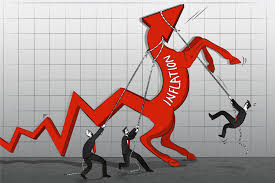
Total personal-consumption-expenditure (PCE) prices are up 4.1 percent over the past twelve months, and the core gauge sits at 3.4 percent, both well above the central bank's 2 percent goal. Despite that, the Federal Open Market Committee (FOMC) has left its target for the federal-funds rate unchanged at 3.50–3.75 percent since January. In a nod to lingering price pressures, the report states plainly, "The Committee will deliver price stability." Gold traders appear less certain: spot bullion surged to an intraday of 4,059 dollars per ounce on Monday, a sign that many investors continue to favor hard assets over official assurances.
Beneath the headline inflation numbers, the labor market remains surprisingly tight. June's unemployment rate held at 4.2 percent, layoffs are subdued, and private payrolls keep climbing. Even so, household consumption advanced only 1.3 percent annualized through May, and the housing sector, strong in prior years, has stalled, with existing-home sales and single-family starts basically flat. First-quarter real GDP managed a 2.1 percent pace, supported by a burst of high-tech investment and a rebound in federal spending after last year's shutdown. The central bank attributes some of the current price heat to energy shocks, the type of shock that historically eludes policy fine-tuning.
Markets are working through these mixed signals. Short-dated Treasury yields have jumped as traders price in a steeper rate path, yet major equity indexes continue to climb. The Fed itself concedes that stocks, corporate debt, and residential real estate all sit "above historical norms," even while total non-financial debt-to-GDP is the lowest since the early 2000s. Leveraged hedge funds and life insurers add a layer of fragility, and a few private-credit funds have recently gated redemptions, a reminder that ample liquidity can evaporate quickly when confidence wanes.
Since December the Fed has been buying short-term Treasuries to keep bank reserves "ample", a balance-sheet approach it reaffirmed in June. Money-supply growth, however, looks tame on the surface; M2's latest twelve-month uptick merely matches the moderate tempo of the 2010s. Critics of activist monetary policy note that real-world prices respond to cumulative liquidity, not monthly snapshots, and that today's simmering inflation emerged after the most aggressive money expansion in modern history.
To navigate these cross-currents, the Board is launching five internal task forces covering communications, the balance sheet, data quality, productivity and jobs, and inflation frameworks, with recommendations due later this year. Overseas, sluggish growth collides with energy-driven price spikes, pushing several foreign central banks to raise rates while the trade-weighted dollar edges higher.
Whether new committees and communiqués can restore purchasing power remains to be seen. For now, investors appear to be hedging their bets, literally in gold, against the possibility that the path back to 2 percent inflation will prove longer and rockier than the Fed's rhetoric suggests.