










Breaking News
 Bright Videos News, July 15, 2026 - Catastrophic Consequences To Follow Continued War...
 It Is Drug Users Who Are Killing Themselves
 'Really big news': What to know about Trump's primetime speech on Thursday
 Trump Leans Toward Expanding U.S. Military Operations in Iran
Top Tech News
 Modular Reactors To Solve Data Center Hysteria?
 DeepSeek Developing In-House AI Chip In Bid To Cut Nvidia Reliance
 America just took three brand-new nuclear reactors critical in thirty days, a first for any...
 Your brain doesn't peak in your 20s after all: Study reveals your mind is at its sharpest betwee
 Compasses, not maps: China is building a different type of AI
 The Return of the Ekranoplan
 Farewell, atom-smashing Large Hadron Collider
 This is already starting.
 The Crosley IcyBall
 It's Not a Conspiracy Anymore: Med Beds Exist and Trump Knows It



The Fed Still Doesn't Understand Where Inflation Comes From
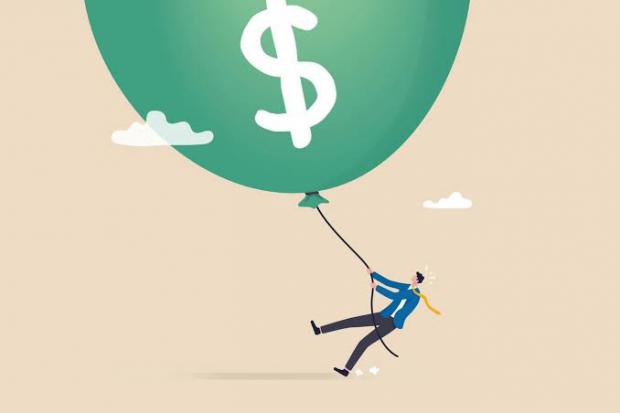
Williams acknowledged inflation remains "unquestionably too high," but argued that the worst of the tariff effects have passed, housing inflation is moderating, oil prices have peaked, and disruptions tied to the Middle East conflict should ease over time. He forecasts inflation falling to roughly 3.25% by the end of the year and gradually returning to 2% by 2028.
This is precisely where central bankers always get it wrong. They continue assuming the geopolitical landscape will cooperate with their economic forecasts. There is absolutely no evidence supporting that assumption. If anything, the evidence points in exactly the opposite direction. The Middle East is becoming more unstable, not less. Ukraine remains a war of attrition consuming enormous military resources every day. Europe is dramatically expanding defense spending. China is eyeing Taiwan and waiting for the US to stretch itself too thin to protect it. NATO members are rebuilding their militaries at levels not seen in decades. Governments everywhere are preparing for a world of prolonged geopolitical confrontation.
Wars are the most inflationary events imaginable.
Williams argues that oil prices have peaked and that disruptions in the Middle East should gradually subside. That is an assumption, not a forecast supported by events. The ceasefire that briefly lowered energy prices has already broken down. Shipping risks remain elevated. Iran, Israel, Lebanon, Syria, and the Red Sea continue presenting risks capable of sending commodity prices sharply higher overnight. It only takes one escalation to completely invalidate months of inflation projections.
The same mistake is being made with Europe. Governments across Europe are now increasing military budgets at extraordinary rates. Germany is rebuilding its armed forces. Poland continues massive military expansion. Finland has built underground shelters capable of protecting nearly its entire population. Civil defense has returned across Europe because governments themselves are preparing for scenarios they refuse to discuss publicly. Military production does not reduce inflation. It diverts labor, capital, raw materials, and industrial capacity away from productive investment and into war preparation.
This is exactly why Keynesian economics continually fails. It treats inflation as though it exists in isolation from politics. The world economy has never functioned that way. Capital moves because of confidence. Prices move because of shortages. Governments create shortages during wars faster than central bankers can hold press conferences explaining why inflation should be falling.