










Breaking News
 US Deploying Additional Warplanes to Middle East as It Prepares To Escalate Iran War
 Both Russia and Iran Are at War, and Neither Knows It.
 When Food Becomes a Luxury
 Senate Vote Stuns Netanyahu, Shows Support for Israel Slipping
Top Tech News
 Anthropic is launching its own drug discovery programs for rare diseases using Claude...
 SpaceX AI Satellites Will Have 250 Kilowatts of Power
 Chinese researchers have developed a sodium-metal battery that can fully charge in just 4 minutes...
 SpaceX Starship Flight 13 in 3 Days - Thursday July 13
 Chinese Scientists Develop Nuclear Battery Using Carbon-14
 Teleoperated humanoid robots complete first-ever live surgery
 Floating capsule auto-disinfects water without chemicals or battery
 Modular Reactors To Solve Data Center Hysteria?
 DeepSeek Developing In-House AI Chip In Bid To Cut Nvidia Reliance
 America just took three brand-new nuclear reactors critical in thirty days, a first for any...



When Food Becomes a Luxury
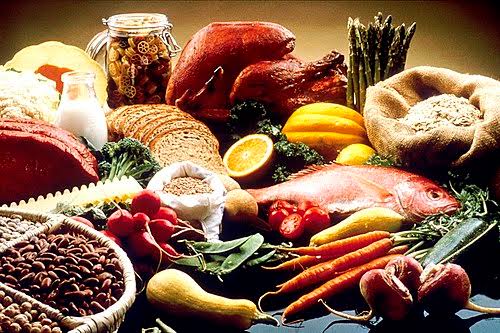
Endless aisles filled with fresh produce, dairy, meat, and household essentials reflected not only the country's productive capacity but also the confidence that ordinary families could afford to fill their shopping carts without questioning every purchase. Today, that image is beginning to fracture. Across the United States, an unsettling behavioral shift is taking place inside grocery stores. Consumers are pausing longer before reaching for familiar products, comparing prices with unprecedented scrutiny, abandoning name brands for cheaper alternatives, and, perhaps most disturbingly, placing food back on the shelves before reaching the checkout. These silent decisions rarely appear in economic headlines, yet they may reveal more about the nation's financial condition than any quarterly GDP report or inflation statistic.
The contradiction defining the current American economy is becoming increasingly difficult to ignore. Official reports suggest that inflation has moderated compared to the historic peaks experienced after the pandemic, unemployment remains relatively low, and consumer spending continues to support economic growth. Yet beneath these encouraging indicators lies an uncomfortable reality: millions of households no longer measure financial security by whether they have employment, but by whether they can comfortably afford dinner at the end of the week. Economic resilience loses much of its meaning when full-time employment no longer guarantees access to necessities that were once considered ordinary.
This transformation represents far more than a temporary consequence of inflation. It reflects the cumulative erosion of purchasing power that has occurred over several years. Prices rarely return to previous levels after inflation slows; instead, they stabilize at significantly higher levels while wages struggle to keep pace. As a result, families experience a permanent reduction in living standards even when economic reports celebrate improving inflation figures. The distinction between declining inflation and declining prices is frequently misunderstood, allowing optimistic narratives to overshadow the daily financial pressures confronting ordinary consumers.
Perhaps nowhere is this disconnect more visible than inside the grocery store. Food occupies a unique position within household budgets because it cannot be postponed indefinitely. Consumers may delay purchasing a new vehicle, cancel vacations, or postpone home renovations, but eating remains unavoidable. When families begin reducing the quantity or quality of food they purchase, economists should recognize this not as a routine adjustment but as evidence of financial distress. Grocery shopping has quietly become one of the most revealing indicators of household confidence because it reflects decisions that cannot easily be manipulated by optimism or political messaging.
According to CNBC, major food manufacturers including PepsiCo, General Mills, Kraft Heinz, Campbell's, and Conagra have increasingly relied on aggressive discounts, promotional campaigns, and price reductions after consumers significantly reduced grocery spending. Rather than reflecting stronger competition, these pricing strategies reveal weakening demand among households increasingly unwilling—or unable—to absorb years of cumulative food inflation. Even large multinational corporations are acknowledging that consumers have fundamentally changed their purchasing habits after years of rising living costs.
The psychological consequences of this transformation are equally significant. Shopping, once a routine weekly activity, has evolved into an exercise in financial calculation. Every item placed into a shopping cart represents a trade-off against another essential expense. Parents compare unit prices with mathematical precision, elderly consumers sacrifice nutritional diversity for affordability, and young professionals increasingly discover that stable employment no longer guarantees financial comfort. The supermarket has become less a marketplace and more a battlefield where every purchasing decision reflects broader economic anxieties.