










Breaking News
 The TERRIFYING Reason Peter Thiel Escaped the US
 Professor Jiang Breaks Down the Greater Israel Project
 Edward Snowden on Palestine and Sam Altman
 Palantir. IT'S WORSE Than You Think
Top Tech News
 Solar Panels Are Doing Something Nobody Expected
 DeLorean climbs skyward to race electric flying cars
 Atari's 800XL returns with a keyboard, cartridges and BASIC
 Bioinspired robot airdrops into remote waters via morphing wing-sail
 Anduril interceptor adapts to emerging threats via swappable stages
 I Built a Website to Expose Solar and Battery Scams
 Whistleblower Issues Dire Warning: Rogue AI, Hacking Nuclear Programs...
 Multi-material insulation delivers up to 10,000 x the stiffness
 Anduril's plan to save US sub edge from China's undersea surge
 Researchers Develop AI 'Mind-Reading' Tool That Reconstructs What Your Eyes See



The bone density fraud: How a flawed test and toxic drugs created a multi-billion dollar...
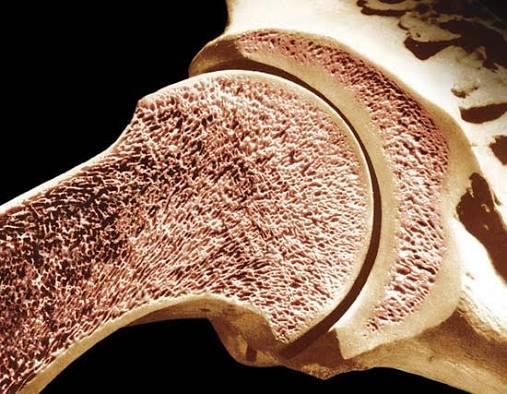
The medical screening that labels healthy aging as disease
A 65-year-old woman learns from a DEXA scan that her T-score is -2.3, labeling her osteopenic. She leaves with a bisphosphonate prescription, told it will strengthen her bones. What she won't hear: her bone density is normal for her age. The T-score system was never meant for clinical diagnosis. And the drug—originally developed to soften water in orange grove irrigation systems—works by poisoning the cells that keep bones resilient.
How normal aging became a disease
In 1994, a WHO study group proposed diagnosing osteoporosis at 2.5 standard deviations below a healthy 30-year-old's bone density, calling the cutoffs "somewhat arbitrary." These criteria were intended only for research. But the meeting was funded by Rorer Foundation, Sandoz and SmithKline Beecham—companies that would profit immensely from turning aging into a treatable condition. Today, 52% of white women over 50 qualify as osteopenic, and 28% as osteoporotic. Only 20% have "normal" bones.
The toxic history of bisphosphonates
Bisphosphonates were first used to prevent calcium scale in irrigation pipes. They work by poisoning osteoclasts, the cells that break down old bone. After three to five years, bone density rises, but the bone is brittle—old, weak tissue accumulates beneath new growth. Fracture rates often increase. Side effects include intestinal perforation, liver and kidney damage, atrial fibrillation, spontaneous fractures and irreversible jawbone degeneration. The FDA warns of severe bone, joint and muscle pain that may never resolve.
What the data actually shows
The T-score does not predict fractures. A 2019 study of 3,700 adults found that only 16% of fractures in women and 15% in men were linked to low bone density. Nearly 73% of women and 94% of men who broke a bone had normal scans. In 1996, the Swedish Council on Technology Assessment concluded that bone density cannot identify fracture risk and recommended against screening. Yet 18 million Americans carry an osteopenia diagnosis. A 2014 study found that repeating DEXA scans after the first provided no useful information over eight years.
The real causes of bone loss
Bone health requires more than calcium. Weight-bearing exercise signals the body to maintain bone. Astronauts lose up to 10% of bone density in six months. Acid-blocking drugs (PPIs) increase hip fracture risk by 26%. Fluoride in water produces structurally inferior bone. Environmental toxins like BPA, lead and mercury inhibit bone formation. Even soda consumption raises fracture risk.
The safe path to strong bones
Magnesium activates vitamin D for calcium absorption; deficiency itself is a risk factor. Vitamin D with K2 increases bone strength and reduces fractures. Vitamin C supports bone formation at the genetic level. Strength training produces bone that bends rather than breaks—unlike bisphosphonates, which increase density at the cost of quality.