










Breaking News
 Food Shortages In 2027? The ICC Warns That Global Food Prices Could Rise By Close To 70%
 Interview 2039 - The "Rogue AI" Psyop on the IMA Roundtable
 Federal Survey Of 21,990 Kids Ties COVID Shots To Autism, ADHD
 AI Geniuses Are Decidedly Not Policy And Economic Geniuses
Top Tech News
 SHOCK CASE REPORT: Advanced Alzheimer's Patient Regains Speech, Memory, Mobility...
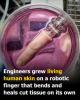 Most artificial limbs rely on silicone or plastic to mimic human hands.
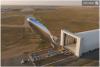 Flying cell tower beams phone signal to Japan from 10 miles up
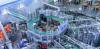 Chinese Commercial Reactor Achieves Nuclear Fusion with Clean Hydrogen-Boron Fuel
 Med Beds Just Took a MASSIVE Step Forward, Healing People in Days!
 Palmer Luckey: Autonomous Weapons Are Ancient and Why Anduril Won't Build Humanoids | EP #295
 A laser just photographed objects through six feet of concrete
 Elon Musk's Next-Gen Motor Destroy Entire EV Industry
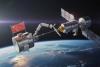 China's disputed satellite refueling heralds new space war era
 BYD Will Put Solid-State Batteries In An EV Next Year: Executive



After Years Of Delays, Aptera Is Finally Preparing To Build Customer Cars
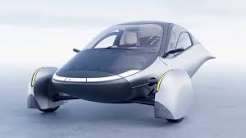
Aptera is finally gearing up to build its first 40 customer cars after years of delays and uncertainty. The company says it has ordered the bodies, frames, and suspension components for this first batch of vehicles, which will be the first not branded as test mules or prototypes.
It's unclear how many it will actually build, but Aptera says some of these first vehicles will end up in customers' hands, though the chances of delivery this year are very slim. Aptera expects to receive all the parts it's ordered starting in October, and it says it already has enough solar cells in stock to equip up to 100 vehicles.
However, other key components are still needed, and it expects to secure them in the coming months, without specifying exactly what it still needs to order or providing a clear delivery time frame.
Aptera doesn't actually have the money to fund the production ramp, and it also still needs to complete testing and obtain final regulatory approvals before commercial sales commence. That's why the company still hasn't given a firm date for the start of production and first deliveries.
But while the road to production still seems long, Aptera has slowly been making progress toward that goal. Over the past year, the company has been trying to raise money, build the validation vehicles it needs to obtain regulatory approval, and work toward securing a service network.
Now it's moving from prototypes toward production readiness, although ordering parts for a few dozen vehicles is still a long way from proving it can manufacture cars at scale. Turning a profit also seems like a far-off prospect right now, and the company's future remains uncertain.
It has spent years announcing milestones that made it seem like production was just around the corner, but then it was seemingly pushed back. But now it appears closer than it has ever been, although until cars are actually completed, pass all required approvals, and reach reservation holders, production remains a promise.
Even building 40 vehicles will barely scratch the surface of a preorder list of roughly 50,000. This initial batch will do little to ensure Aptera's long-term survival, and it still all hinges on whether it can raise enough capital to expand production without additional delays, price increases, or yet another setback and reset of its plans.
Still, Aptera has made tangible progress over the last year, at least officially. It announced that it began assembling the first production-intent validation vehicles last November and later moved battery-pack and solar-panel assembly into the same facility.
It's also worth noting that Aptera has an easier regulatory path than for a four-wheel passenger car, largely because federal law treats its three-wheeler as a motorcycle.