










Breaking News
 Black Privilege Called Out! – WNBA Incident Boils Over Into BIack Fatigue Across America
 Pentagon Drafting New Nuclear Strategy To Expand Options for Tactical Nuclear Weapons Use
 WATCH: Mall of America in 1992 is completely unrecognizable from today…
 Gen Z embraces 'toxic masculinity' and goes full Roman Empire with 'looksmaxxing'…
Top Tech News
 Sodium Ion Batteries Will be 80% Cheaper & Last LONGER!
 German startup SAXON Q has introduced a diamond-based quantum computing system...
 Elon Musk To Build The Largest Building In The World - 100 Million Square Feet
 Bitcoin 'Red Team' Says AI Is Finding 100s Of Critical Exploits Across Core Projects
 EG4 Power Pro VS Ruixu Lithi VS Yixiang Budget Battery! Best Selling Battery Showdown!
 Insect wings can kill bacteria without any chemicals!
 5th Small Modular Reactor Validated Since June, Poised For Mass Production
 Tesla Never Made An Electric Jet Boat, So This YouTuber Built One Himself
 What could possibly go wrong? Scientists use AI to design new viruses
 Dual-motor suitcase drive underpins 3,000-hp hypercar


US SPR Falls Below 300 Million Operational Limit As Oil Drain Unexpectedly Surges...
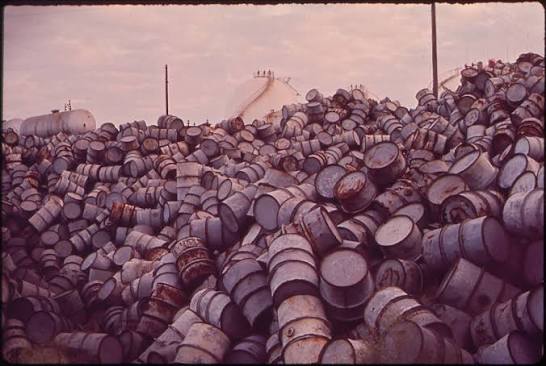
As negotiations between the US and Iran to reopen the Strait of Hormuz go nowhere, oil prices continue to slide lower on some naive hope that a resolution to the conflict will magically emerge. Meanwhile, both commercial and strategic stocks continue to be drained at a historic pace, and one day virtually every tank bottom will be hit, sparking a historic surge in commodity prices as the market realizes that physical always wins the war with paper oil.
That day just got closer today when the US reported that crude oil stocks in the Strategic Petroleum Reserve fell below 300 million barrels for the first time since early 1983, as global inventories are under pressure due to the Iran war.
The SPR fell by 6.1 million barrels to 298.7 million barrels last week, according to data released by the Department of Energy on Monday. The reserve is at its lowest level since January 1983.
The 6.1 million drain was a big jump in the SPR's recent moderating trend which saw the previous week only 2.8 million barrels exit the strategic reserve. Instead, the outsized outflow which was the biggest in almost 2 months suggests that US reserves are once again working overtime to prevent the oil price frrom spiking.
Yet as we have repeatedly explained, it is only a matter of time before the SPR can no longer be used to plug the gap so to speak. That's because the oil industry has generally accepted that the operational minimum for oil in the SPR, a point at which it would be more difficult to pump out the oil, is somewhere between 250 million and 300 million barrels. Meanwhile, sizing studies done on the SPR in the 1970s recommended an inventory minimum of 250 million barrels.
In other words, the US is already if not at the operational minimum, it will certainly hit it in a few weeks, should the weekly drain persist at this rate.
The rapid drain of the SPR explains why, according to unconfirmed reports, Iran has "completely ruled out any future negotiations with the Trump administration," declaring it will wait out Donald Trump's term until January 20, 2029, per Iranian outlets and Ghalibaf advisor's post.
"Trump will not reach an agreement with us. We will accompany him until his term ends," said Majid Shakeri, advisor to Parliament Speaker Ghalibaf.
He posted: "The path to victory is neither fighting nor a deal — it is managing the process of neither war nor peace, up to the point of victory. Publicly confirming negotiations with the U.S. is sheer folly. The winning approach is denial, ambiguity, and strategic patience."
The US release is part of a coordinated action by countries in the International Energy Agency to support the global oil market with 400 million barrels, although the US has been by far the most aggressive lender of its strategic reserves.