










Breaking News
 Russia Hits Ukraine Power Plant Despite "Energy Ceasefire"
 Multi-material insulation delivers up to 10,000 x the stiffness
 Trump Just Started The Debt Spiral
 Look up...
Top Tech News
 Anduril's plan to save US sub edge from China's undersea surge
 Researchers Develop AI 'Mind-Reading' Tool That Reconstructs What Your Eyes See
 Video: Dexterous robot hand learns the delicate art of silk embroidery
 The computer that can read your mind:
 Seven apps. One craft
 SHOCK CASE REPORT: Advanced Alzheimer's Patient Regains Speech, Memory, Mobility...
 Most artificial limbs rely on silicone or plastic to mimic human hands.
 Flying cell tower beams phone signal to Japan from 10 miles up
 Chinese Commercial Reactor Achieves Nuclear Fusion with Clean Hydrogen-Boron Fuel
 Palmer Luckey: Autonomous Weapons Are Ancient and Why Anduril Won't Build Humanoids | EP #295



Can Wildfire Smoke Affect Your Cells?
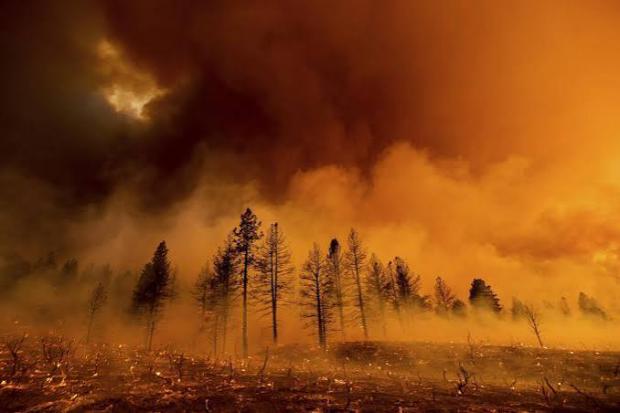
We've all seen the major fires in Spain and France. Prolonged heat, drought, and strong winds are complicating matters. Spain continues to battle several significant wildfires in Leon, Zamora and Castellon. Some fires have stabilized enough for residents to begin returning, while other fires continue to remain active.
France is experiencing one of its largest wildfire emergencies on record. Southern France is affected, include Gironde, Var/Provence, and the Bordeaux region. In the Gironde fire alone, 220,000 evacuations have occurred. Thousands of firefighters are deployed. Some fires have been largely contained, but others have reignited due to hot, dry, and windy conditions.
Greece is a very high-risk wildfire zone. Large fires burn near Athens. Homes, forests, and farmland have been destroyed, as strong winds continue to hamper firefighting efforts. During those efforts, two firefighting helicopters collided, killing two crew members during suppression operations.
Canada's 2026 wildfire season is very active, with fires across the boreal forest ongoing in areas like Manitoba and Saskatchewan. Canadian authorities continue to monitor and respond to new fire starts as hot, dry conditions persist in parts of the country.
Washington State is experiencing one of its most severe wildfire periods in history. The fires are fueled by extreme heat, prolonged drought, low humidity, and strong winds, particularly across the eastern part of the state. The area near Spokane is hardest hit, with multiple large fires having already burned over 250,000 acres. Over 700 buildings have burned and over 65,000 people have been forced to evacuate.
Why are so many fires occurring?
Human causes are being investigated. Authorities are investigating whether faulty power infrastructure contributed to the fires, and arson after multiple ignition points were discovered. In Washington, fires may have gotten out of control in one of its many homeless camps. In all cases, prolonged heat waves, severe drought, low humidity, and strong winds complicate the matter. Dry vegetation is acting as abundant fuel to feed these fires.
The Smoke!
Smoke continues to affect air quality both locally and in neighboring regions. Folks in Michigan, Ohio and other border states experienced major smoke from the Canadian wildfires.
Wildfire smoke is not just wood smoke. Instead, it is a complex mixture of gases and microscopic particles produced when vegetation, buildings, vehicles, and other materials burn. The composition of the smoke depends on what is burning, the temperature of the fire, weather conditions, and how long the smoke remains in the atmosphere.
Just think about all the glyphosate sprayed on those forests. Now it is burning.