










Breaking News
 The Homeless Industrial Complex:
 The Lucid Cosmos Will Have More Range Than Any Tesla
 Trump Admin Ends Medicaid Funding For Sex-Change Procedures On Kids
 Strong 3D printable elastic polymer resists damage
Top Tech News
 Vitalik Buterin Says Ethereum Is Betting Its Future On Quantum Security And AI
 Everything You Wanted To Know About Building A Cheap AI Setup (That Still Works)...
 If They Were Human, They'd Be Arrested. Experts Respond To Rogue AI Breaches
 Sodium Ion Batteries Will be 80% Cheaper & Last LONGER!
 German startup SAXON Q has introduced a diamond-based quantum computing system...
 Elon Musk To Build The Largest Building In The World - 100 Million Square Feet
 Bitcoin 'Red Team' Says AI Is Finding 100s Of Critical Exploits Across Core Projects
 EG4 Power Pro VS Ruixu Lithi VS Yixiang Budget Battery! Best Selling Battery Showdown!
 Insect wings can kill bacteria without any chemicals!
 Tesla Never Made An Electric Jet Boat, So This YouTuber Built One Himself



We Need to Be Upfront That There Are Risks Involved by Opposing the Government
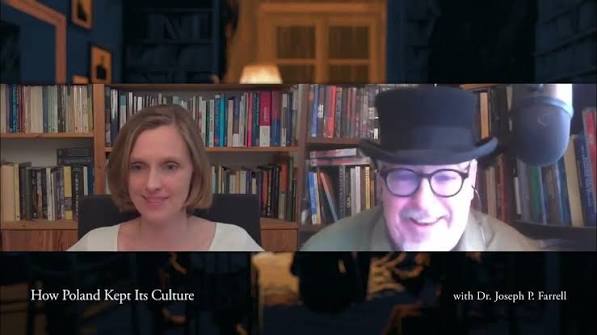
Dr. Joseph P. Farrell is no stranger at the Solari Report, joining Catherine each quarter for their engaging News Trends & Stories conversations.
An Oxford-educated scholar with a PhD in patristics, Dr. Farrell posts at his Giza Death Star website and is the author of numerous books on topics ranging from physics and finance to theology and alternative history.
At Solari, Dr. Farrell often emphasizes the importance of building and saving the culture. In this interview, we discuss what "building the culture" means in practice, focusing on what we can learn from Poland's experience while it was a satellite state of the Soviet Union. As Robert Zuzowski describes in his 1992 book, Political Dissent and Opposition in Poland (discussed by Dr. Farrell in 2021 in a members-only webinar at Giza Death Star), Poland's Workers' Defense Committee (KOR) created a successful, nonviolent resistance movement by innovating a "unique pattern of dissent" that built on Poland's rich cultural and historical traditions.
Drawing on the relevance of the Polish/KOR case study, Dr. Farrell and I specifically consider:
The aspects of Polish culture and history that provided fertile ground for effective resistance
Key strategies that made KOR's decentralized approach successful, including their ability to overcome divide-and-conquer tactics, their development of workarounds to the state's attempts to monopolize information, and their emphasis on nonviolence
How these strategies can be translated to our current time
The Poles seem to have been very aware of their culture and what they needed to save. While practical aspects of KOR's strategy might be relatively easy to copy, the real key to KOR's success was that they assumed full responsibility for nurturing their own culture. In comparison, following more than a century of social engineering assaults, many in the Western world seem unaware of the roots of their culture.
Dr. Farrell shares profound insights, much food for thought, and practical advice on how we can reconnect with and nurture our cultural roots. In doing so, we may be able to save the nation by saving the culture.