










Breaking News
 The Middle East Security Map Is CHANGING FAST! Saudi Arabia, Pakistan & Turkey Move Toward...
 Report: US Troops and Diplomats Evacuating Posts Across the Middle East
 The USDA's $8 Billion Farmer Bailout Is Communism Disguised as Relief
 Sell The Bailout: Skydance Tumbles As Musk's $1 Billion Check Reminds Everyone Paramount...
Top Tech News
 Chicago Opens First "Teacher-Free" AI School as Global Push Accelerates
 Solar Panels Are Doing Something Nobody Expected
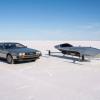 DeLorean climbs skyward to race electric flying cars
 Atari's 800XL returns with a keyboard, cartridges and BASIC
 Bioinspired robot airdrops into remote waters via morphing wing-sail
 Anduril interceptor adapts to emerging threats via swappable stages
 I Built a Website to Expose Solar and Battery Scams
 Whistleblower Issues Dire Warning: Rogue AI, Hacking Nuclear Programs...
 Multi-material insulation delivers up to 10,000 x the stiffness
 Anduril's plan to save US sub edge from China's undersea surge



World's largest all-electric plane completes maiden flight

All-electric aircraft that run on electric motors powered exclusively by batteries have been around for over half a century, and some have even been certified since 2020. However, despite considerable progress, such machines have had run into the problem of scale. It's one thing to build a one-person craft or even a passenger vehicle capable of handling a dozen or so passengers. It's quite another to move into the weight class that commercial aircraft require to become economical.
The Heart Aerospace X1 Demonstrator represents a significant milestone in that, with its wingspan of 106 ft (32 m), it is comparable in size to conventional regional turboprops. The prototype's takeoff weight is considerably lower than that of, for example, a De Havilland Canada Dash 8-Q300, which comes in at 43,000 lb (19,500 kg), and it also suffers from a lower speed and operational range.