










Breaking News
 Quick Return To WAR: US Responds To Iran's "Surprise Attack" With Bombings
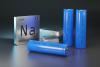 Sodium Battery Technology
 Claude will now watermark all content generated using its tools
 The Bond Market Bailout Just Started
Top Tech News
 Portable 1MW Kaleidos Microreactor Secures Critical Nuclear Fuel Deal Through 2030s
 This New All-In-One Range Extender Is Ready To Go Into Any Electric Truck
 Aptera Reveals The Secret To Building Its Solar EV: China
 High-voltage sodium home battery emerges as affordable rooftop solar solution
 Peter Thiel-Funded Company Anduril to Triple the Number of Autonomous Surveillance...
 China has released Origin Pilot, claimed to be the world's first open-source operating system...
 ShieldAI XBAT Drone Fighters Can Give A Fighter Drone Wing to Every US Destroyer
 Brain organoids, kept alive more than five years, matured like human brains
 Parkinson's patient's tremors VANISH within minutes of GROUNDBREAKING treatment
 NEW HOMES ARE BUILT WITH THIS AND IT'S MAKING YOU SICK


300 Savage vs. 308: Which Rifle Cartridge Is Better?
Deciding between rifle cartridges for hunting and target shooting often comes down to the fine details. As we dig into the 300 Savage vs. 308 Winchester debate, you'll see how similar each round is, but the differences that will lead to you choosing the better one for your shooting needs, and why the 308 Win easily replaced the 300 Savage as one of the greatest hunting and target rounds of all time.
I've used the 308 to harvest several deer, and my dad killed his first elk with a 308. I also think it's a great gun to take to the range and test and hone your long-distance shooting skills. All in all, I see why the 308 is one of the most popular rifle cartridges in the U.S.
300 Savage vs. 308 Winchester
As you continue reading, you'll discover the differences in cartridge specs that ultimately lead to differences in performance, such as recoil, trajectory, ballistic coefficient, ballistics, and more. Alrighty, enough blabbing. Let's get started!
Cartridge Spec Differences
300 Savage vs. 308 Winchester Recoil
The recoil of the 300 Savage and 308 Win is very similar. The 300 Savage produces ~13 to 15.5 ft-lbs of recoil energy in an 8-pound rifle, depending on the load. The 308 Winchester produces ~13.5 to 17.5 ft-lbs of recoil energy in an 8-pound rifle, depending on the exact load you choose.
With that said, I regularly shoot my dad's 308 without a problem. It definitely has some kick to it, but it's not a shoulder bruiser by any means. However, I wouldn't introduce someone to rifle shooting with either cartridge. The 22 LR or 223 Rem are much better options for recoil-sensitive shooters.
The 300 Savage wins this section by a slight margin.
For a closer look at how the 308 kicks across bullet weights and rifle setups, see our breakdown of 308 recoil.
Trajectory
The 300 Savage has a relatively flat trajectory to ~200 yards, but its bullet drop increases significantly beyond that distance. It's generally thought of as a 300-yard maximum cartridge. Most deer hunters won't push it past 300 yards because its trajectory drops too steeply beyond that range, as does the stopping power required for ethical kills.
On the other hand, you can zero in your 308 Win rifle at 200 yards and maintain a reasonably flat trajectory past 500 yards. For example, when a 308 Win rifle is zeroed in at 200 yards and fires a 168 grain TTSX at 2,700 fps muzzle velocity, the bullet will only drop -8.4" at 300 yards; -49.1" at 500.
Ballistic Coefficient
Ballistic coefficient (BC) reflects how efficiently a bullet overcomes wind drift and frontal air resistance. It's a numeric representation of a projectile's aerodynamic efficiency. A high BC is preferable because it indicates a bullet that pierces the air more efficiently.
BC varies considerably based on bullet design and several other factors beyond the scope of this article. That said, a sleeker, heavier bullet tends to have a higher BC, as it takes more force to disrupt its flight than that of a stubbier and lighter one.
The shorter, blunter bullets of the 300 Savage typically have a G1 BC of ~0.300–0.370. That isn't terrible, but it's not as good as the 308 Win.
Longer, more aerodynamic 308 bullets typically have a G1 BC of ~0.350–0.530, which represents better wind resistance and downrange velocity retention. This is a significant reason why the 308 is far superior to the 300 Savage for long-range shooting and hunting.
Accuracy
Both cartridges are known for their inherent accuracy, but the 308 has the advantage. A cartridge's accuracy isn't solely determined by its recoil, trajectory, and other aspects of its performance. The shooter, rifle, and atmospheric conditions also affect accuracy.
I don't have many opportunities to take shots farther than 200 yards while hunting, but at my backyard range, I can step off to about 300 yards. I'm really accurate with the 308 within 200 yards and reasonably accurate out to 300 yards, and I don't consider myself an expert marksman at all.
To maintain as fair a comparison as possible, we'll only consider the recoil, trajectories, and common bullet designs of these rounds. While the 300 Savage has a slight advantage in recoil, the 308's flatter trajectory and greater abundance of highly accurate bullets make it much easier for the average shooter to be more accurate than with the 300 Savage.
Stopping Power
"Stopping power" is difficult to define. It means different things to different shooters, and we could argue about its exact meaning for eternity.
To complicate matters further, shot placement matters more than stopping power. A poorly placed shot (e.g. in the foot) from a cartridge with more stopping power can be less effective than a well-placed shot (e.g. in the vitals) from a weaker alternative.
For the sake of brevity, let's agree that penetration depth, wound column diameter, and kinetic energy transfer are the primary factors determining stopping power. To that end, the 308 undeniably delivers more energy at farther ranges.
My dad has taken elk and many deer with his 308 Winchester, but I wouldn't want to attempt to take an elk with a 300 Savage except at very close range (i.e. within 100 yards).
The 300 Savage is still effective on deer out to ~200 yards, but its kinetic energy drops off too quickly past that distance to make ethical shots. The 308 Win has more stopping power than the 300 Savage: just another reason why so many hunters still favor it to this day.
Hunting
Both cartridges are practical for big game hunting, although the 308 Winchester is the better option for several reasons:
1. It's more versatile and can ethically harvest deer, elk, bears, and moose from greater distances than the 300 Savage thanks to its superior stopping power.
2. It's chambered in more rifle styles than the 300 Savage.
3. It's more accurate over greater distances, thanks to its flatter trajectory and modern bullet designs.
4. More hunting rifles and ammunition are available for the 308 than for the 300 Savage.
Read the full comparison here: https://ammo.com/comparison/300-savage-vs-308