










Breaking News
 Mike Adams Joins Scott Kesterson to Discuss Local AI, Decentralized Intelligence and Human Freedom
 The James Corbett Book (and Movie!) Club
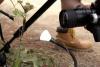 Tiny, modular pod attacks macro photography's lighting nightmare
 Laser-beam mosquito shooter is now available for preorder
Top Tech News
 Portable 1MW Kaleidos Microreactor Secures Critical Nuclear Fuel Deal Through 2030s
 This New All-In-One Range Extender Is Ready To Go Into Any Electric Truck
 Aptera Reveals The Secret To Building Its Solar EV: China
 High-voltage sodium home battery emerges as affordable rooftop solar solution
 Peter Thiel-Funded Company Anduril to Triple the Number of Autonomous Surveillance...
 China has released Origin Pilot, claimed to be the world's first open-source operating system...
 ShieldAI XBAT Drone Fighters Can Give A Fighter Drone Wing to Every US Destroyer
 Brain organoids, kept alive more than five years, matured like human brains
 Parkinson's patient's tremors VANISH within minutes of GROUNDBREAKING treatment
 NEW HOMES ARE BUILT WITH THIS AND IT'S MAKING YOU SICK


Tiny, modular pod attacks macro photography's lighting nightmare
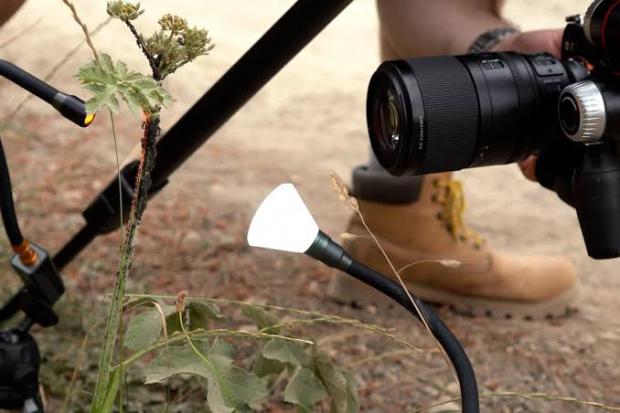
Adaptalux's answer to that problem is the Pod Mini, a palm-sized portable lighting hub that's just gotten its first major overhaul – headlined by Bluetooth control and a tougher aluminum body.
Shooting extreme close-ups forces photographers into an awkward corner. To keep a minuscule subject sharp, you need a narrow aperture (a high f-number), but that same setting lets in far less light. Move the camera in close enough to fill the frame with an insect's eye, and the lens barrel starts physically blocking ambient light from reaching the scene. Add in subjects that rarely sit still – a leaf trembling in the breeze, an ant on the move – and you need a burst of light bright enough to freeze motion, not just illuminate it.
That's the gap the Adaptalux system is built to fill. It is a modular, miniature lighting studio that can clip directly onto a camera and/or stand alone, using flexible LED or xenon flash "arms" to light subjects only millimeters away.
The original Pod Mini, the hub that powers and controls each lighting arm, became one of Adaptalux's most popular products, the company says. That popularity came with a downside. "We know it has been out of stock for a little while as we have been working diligently to level up the Pod Mini," Adaptalux said, explaining that demand outpaced supply while the redesign was underway.
The second iteration of the Pod Mini features brand new wireless control. For the first time, the Pod Mini can be operated remotely through a redesigned Adaptalux app, which now lets photographers link multiple Pod Mini 2.0 and Pod 3.0 units into a single Bluetooth-controlled setup – useful for multi-light arrangements like backlighting a subject.
The update also fixes a long-standing annoyance. Previously, there was no way to switch the unit off without unplugging the light arm entirely. Now, holding the plus and minus buttons together powers the device down while saving brightness settings, and pressing plus again picks up right where you left off.
The exterior has changed too. The old acrylic front panel – which, Adaptalux notes wryly, many users didn't realize had a protective white film they never removed – is replaced by a 2-mm (0.08-in) sheet of anodized, aerospace-grade aluminum for extra durability. The buttons are now dark gray, partly to cut down on unwanted reflections showing up in photo backgrounds. Crucially, the proprietary magnetic connector is unchanged, so all existing lighting arms remain compatible with the new hub.
Inside, Adaptalux reworked battery management so Bluetooth won't drain power faster, and the pod holds its charge longer in storage. A master reset, triggered by holding the plus and minus buttons for eight seconds while powered off, has also been added.
Attaching a light arm is simple: insert it into the port and twist slightly, and magnets snap it into place while powering it on automatically; the pod then enters Bluetooth discovery mode, ready to be added in the app. Brightness can be set two ways – manually, via physical plus/minus buttons that step up to 100% (the arm blinks to confirm), or remotely through the app's slider, which offers 1% increments for LED arms and five preset power levels for xenon flash units.