










Breaking News
 EXCERPTS: Citigroup Inc. received approval to launch a wholly-owned securities business...
 The Crown Wants It Kept Secret: AG Asks the Federal Court to Seal Information...
 The Supreme Court Just Denied Your Constitutional Rights
 The state is trying to crush the Amish with ruinous penalties.
Top Tech News
 Genetically Engineered War Dogs for 134 Pound Cyborg Dire Wolves Now – Later 600 Pound Wolves
 They're Quietly REPLACING Our Food With THIS… And Nobody Is Talking About It!
 Chicago Opens First "Teacher-Free" AI School as Global Push Accelerates
 Solar Panels Are Doing Something Nobody Expected
 DeLorean climbs skyward to race electric flying cars
 Atari's 800XL returns with a keyboard, cartridges and BASIC
 Bioinspired robot airdrops into remote waters via morphing wing-sail
 Anduril interceptor adapts to emerging threats via swappable stages
 I Built a Website to Expose Solar and Battery Scams
 Whistleblower Issues Dire Warning: Rogue AI, Hacking Nuclear Programs...



800-passenger commercial plane boldly reinvents how we will fly
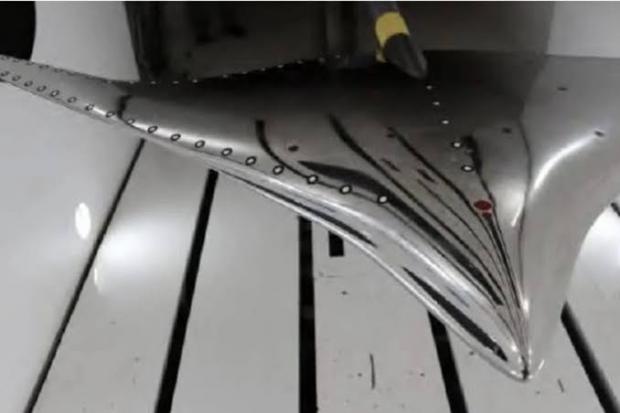
The country has made no secret of its plans to develop its own aviation industry, so it's not a surprise to see that engineers have thrown out existing aircraft design blueprints to build something unlike anything we've seen before.
In June, the Journal of Aerospace Power published a peer-reviewed paper detailing the bold aircraft design developed by the China Aerodynamics Research and Development Centre (CARDC). And its carrying capacity isn't actually the most interesting aspect of it.
Rather than rejigging current commercial plane designs that have distinct components – fuselage, wings and tail – this proposed model instead has a "flying-wing" structure that merges with its body. Engineers working on the design believe this will enable it to not just carry more passengers, but unlock efficiency never seen before in a commercial jet.
And yes, we have seen this design in aircraft for other uses – military, for example – but not in large-scale models built to also carry more than 800 regular folk who largely only know Boeing and Airbus, and maybe Embraer. We're not talking private jets, military or other modes of flight.
According to Chinese media reports, citing the research, the plane would measure 85 meters (280 ft) in width, and be 43 m (141 ft) in length. In context, its wingspan would be around 1.6 times greater than a B-2 Spirit stealth bomber, which also sports a flying-wing design.
China is expected to launch a more modest plane, the C929 – a 280-seat long-range wide-body jet – by 2030, as well as having several other aircraft in the works.
But this ambitious new model, which is yet to get an official name, could fundamentally change the aviation world if realized.
"The high-aspect-ratio flying wing represents an aircraft configuration with remarkable aerodynamic advantages," wrote aerodynamics scientist Li Yonghong and his team in the journal paper, as reported by Chinese media. "Its high lift-to-drag ratio and low induced drag could deliver longer range and lower energy consumption."
In the meantime, China is powering ahead with its aviation program, so expect to see a range of new aircraft take flight in the coming years.
There's no timeline for this 800-seat beast yet, but given the country's focus on building not just bigger but better – and quickly – we'll be keeping a close eye on this project. While flying long-haul with 799 other passengers – several hundred more than the A380 can accommodate – feels like a logistical challenge, to say the least, it's hard to not be excited that a new era of commercial flight is in the works.