










Breaking News
 50 Survival Lessons From The Great Depression: The Horrifying Things Americans Did When Money...
 'Our Military Is Helpless': Migrant Ambush Targeting Military Vehicles In Ceuta Was Pre-Plan
 How Much Gas Prices Have Risen Since The Iran War
 THE HUNGRY DECADE
Top Tech News
 Singapore is experimenting with biological computing using living human neurons...
 It's Happening - Europe is Building an Impossible Fusion Reactor
 Portable 1MW Kaleidos Microreactor Secures Critical Nuclear Fuel Deal Through 2030s
 This New All-In-One Range Extender Is Ready To Go Into Any Electric Truck
 Aptera Reveals The Secret To Building Its Solar EV: China
 High-voltage sodium home battery emerges as affordable rooftop solar solution
 Peter Thiel-Funded Company Anduril to Triple the Number of Autonomous Surveillance...
 China has released Origin Pilot, claimed to be the world's first open-source operating system...
 ShieldAI XBAT Drone Fighters Can Give A Fighter Drone Wing to Every US Destroyer
 Brain organoids, kept alive more than five years, matured like human brains



Six months into Iran war, hard-liners tighten grip as Tehran prepares for prolonged US confrontation
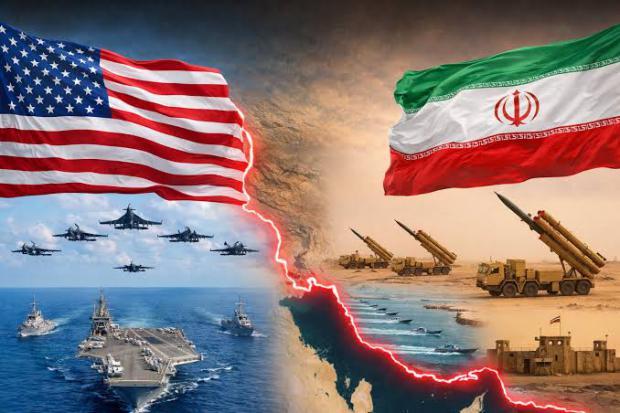
Six months into the war with the United States and Israel, Iran appears to be moving towards a more hard-line political and military structure, with powerful generals and clerics taking key positions around Supreme Leader Ayatollah Mojtaba Khamenei.
The shift suggests that Tehran is preparing for a prolonged confrontation with Washington rather than expecting a quick return to negotiations. At the same time, Iran's leadership appears increasingly focused on preventing economic discontent from turning into fresh protests.
The developments are seen as a setback for US President Donald Trump's earlier hopes that military pressure could weaken or even topple the Islamic Republic of Iran. Instead, the conflict has strengthened the position of officials with long records in Iran's security and military establishment.
Tehran also appears deeply suspicious of agreements with Washington. A ceasefire reached in June broke down soon after amid renewed exchanges of strikes.
With the US continuing economic pressure and threatening additional sanctions, Iranian officials are warning that the country could respond by escalating the conflict, including by disrupting oil flows through the Persian Gulf.
Iran builds a harder inner circle
A series of appointments announced on August 11 and 12 offers a clearer picture of the direction in which Iran's leadership is moving.
Mohsen Rezaei, a veteran Revolutionary Guard commander, was appointed secretary of Iran's Supreme National Security Council. Rezaei spent much of his career in the Islamic Revolutionary Guard Corps (IRGC), including during the 1980-1988 Iran-Iraq war, and has repeatedly run for president as a conservative candidate.
Brig Gen Ahmad Vahidi was confirmed as head of the Revolutionary Guard after serving as acting commander following the death of his predecessor. Other senior military officials, including the commanders of the Guard's naval forces and Iran's armed forces, were also confirmed.
Taken together, the appointments point to an effort by the new supreme leader to strengthen cohesion within the security establishment. Many of the officials have longstanding links with one another and have spent decades inside Iran's military and intelligence structures.
The approach also reduces the space for officials who might favour accommodation with Washington.
Economic pressure tests Tehran
Iran's tougher political posture comes at a difficult time for its economy. The US blockade and sanctions are putting additional pressure on an economy already struggling with inflation, weaker purchasing power and shortages of basic goods.