










Breaking News
 Bessent's War On Left-Wing NGOs May Strip Soros Network, SPLC, And CAIR Of Tax-Exempt...
 Brazil's Socialist President Sees Lead Disappear As Bolsonaro Heir Turns Presidential Election..
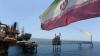 US Looks To Revive 'Prize Courts' For Iranian Oil Seizures
 50 Survival Lessons From The Great Depression: The Horrifying Things Americans Did When Money...
Top Tech News
 Singapore is experimenting with biological computing using living human neurons...
 It's Happening - Europe is Building an Impossible Fusion Reactor
 Portable 1MW Kaleidos Microreactor Secures Critical Nuclear Fuel Deal Through 2030s
 This New All-In-One Range Extender Is Ready To Go Into Any Electric Truck
 Aptera Reveals The Secret To Building Its Solar EV: China
 High-voltage sodium home battery emerges as affordable rooftop solar solution
 Peter Thiel-Funded Company Anduril to Triple the Number of Autonomous Surveillance...
 China has released Origin Pilot, claimed to be the world's first open-source operating system...
 ShieldAI XBAT Drone Fighters Can Give A Fighter Drone Wing to Every US Destroyer
 Brain organoids, kept alive more than five years, matured like human brains



THE HUNGRY DECADE

Every state, however sophisticated, is really just a promise that dinner will show up tomorrow. Renege on that promise and watch how quickly your beautiful institutions lose an argument with a hungry crowd. So when J.P. Morgan titled its August 2026 report Food security is national security, that wasn't a clever metaphor. It was the oldest fact in politics, wearing a Bloomberg terminal.
And the facts don't fit on a fridge magnet. The FAO counts roughly 2.1 billion people — one in four of us — living with moderate or severe food insecurity in 2025, and 645 million going properly hungry. The hunger rate has technically improved (7.8%, down from 8.6% in 2022), which is the statistical equivalent of your ship taking on slightly less water. Underneath, the plumbing is getting worse: outside China, the ranks of the severely food-insecure swelled by about 165 million between 2020 and 2025, with the World Bank pencilling in another 35–70 million by 2028.
Now the part that should interest anyone with a portfolio and not just a conscience. This is no longer a faraway problem for faraway places. A Washington Post–Ipsos poll this year found 66% of Americans now think groceries are unaffordable — up from 45% in February — and that includes most households pulling in over $100,000. Food insecurity has quietly stopped being something that happens to other people and started being the number that ambushes you at the till. It's not a headline anymore. It's your receipt.
"Security" conjures a cosy image: a bulging silo, a shelf you could photograph for a stock catalogue. But food security isn't a quantity — it's a checklist, and a fussy one. Since the 1996 World Food Summit it has rested on four pillars that must all stand at once, for everyone, all the time. Kick out just one and your household is officially insecure — cold comfort that there's a mountain of grain sitting pretty in a warehouse three time zones away, where it can't butter your toast.
Meet the four pillars. Availability is the one everyone pictures: does the food actually exist — grown at home, left over in storage, or shipped in? Access is sneakier, and in rich countries it's usually the real culprit: can you get the food, or does the wall in your way have a price tag (too dear) or a location problem (a washed-out road, a shut port, a neighbourhood with three vape shops and no greengrocer)? Utilisation asks whether your body can turn lunch into actual nutrition — which needs clean water, sanitation and health, a tidy reminder that food security and water security are the same headache, not two. And stability is the referee governing all three over time: eating well in an average year is no consolation if one drought, war or price spike tips you over the edge.
This foursome cracks an awkward paradox. The world grows more than enough calories for everyone — on availability alone, we're in surplus, practically drowning in the stuff. People still go hungry because of access (can't afford it) and stability (something knocked the table over). That's why food crises are usually price crises, not harvest crises, and why the very same failure can clobber a Cairo apartment block and a small town in Kansas through entirely different pillars. Keep this distinction in your back pocket — it unlocks everything ahead, including where the money is to be made.