










Breaking News
 Doug Casey on the Impact of War on Commodity Markets
 America Got Rich on Competition, Then Legislated It Away
 Throttling Ukraine's Starlink access heightens concerns over Musk
 Social Security shock as millions of Americans learn their monthly checks will only be $75 higher...
Top Tech News
 I Built a Website to Expose Solar and Battery Scams
 Whistleblower Issues Dire Warning: Rogue AI, Hacking Nuclear Programs...
 Multi-material insulation delivers up to 10,000 x the stiffness
 Anduril's plan to save US sub edge from China's undersea surge
 Researchers Develop AI 'Mind-Reading' Tool That Reconstructs What Your Eyes See
 Video: Dexterous robot hand learns the delicate art of silk embroidery
 The computer that can read your mind:
 Seven apps. One craft
 SHOCK CASE REPORT: Advanced Alzheimer's Patient Regains Speech, Memory, Mobility...
 Most artificial limbs rely on silicone or plastic to mimic human hands.



This American Battery Could Break China's Grip On The EV Supply Chain
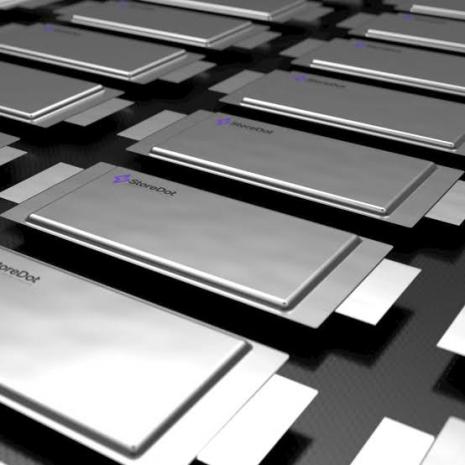
Chicago-based battery startup Pure Lithium is working on a potentially disruptive battery that it claims is cheaper and more energy dense than what's out there while relying on a North American supply chain. It's not solid-state, and it's not a silicon-anode battery. It's actually a lithium iron phosphate (LFP) battery without the graphite traditionally used in lithium-ion packs.
The startup claims to have achieved a breakthrough this past week, with its lithium-metal battery reaching 9,315 charge-discharge cycles. That is more than three times the cycle life of a conventional lithium-ion battery, and Pure Lithium said it's unprecedented: "To the Company's knowledge, no other lithium metal battery in development has achieved such results under equivalent testing conditions."
The vast majority of today's lithium-ion batteries depend heavily on Chinese supply chains. Now, there's a push in North America not only to break that dependence, but also to advance lithium-ion technology so electric vehicles can drive farther, charge faster and last longer. Pure Lithium says it has eliminated the graphite anode, which is expensive and dirty to mine.
"It's half the weight and double the energy density of the battery that we're all using today," CEO Emilie Bodoin said in a Bloomberg interview. A major reason for that, she argues, is getting rid of graphite. The battery isn't on the market just yet, though; Pure Lithium is building a pilot line in Chicago and looking for partners to help it commercialize its tech, Bodoin said.
More than 90% of the world's graphite is processed in China. Graphite also adds weight and takes up valuable space inside a battery cell. It does not actively participate in the battery's electrochemical reaction. Instead, it primarily acts as a host material that allows lithium ions to be stored and released during charging and discharging, according to the startup. Pure Lithium's argument is to get rid of the graphite, free up space inside the cell, and use that space for more usable energy material.
For the cathode, Pure Lithium is using LFP chemistry, which itself has historically been heavily dependent on Chinese supply chains but is now slowly becoming more localized in the U.S. That means its lithium metal LFP battery eliminates the need for several expensive and dirty materials, including nickel, manganese, cobalt, and graphite. While nickel-rich chemistries certainly offer higher energy density than LFP, Pure Lithium says it can make up for that difference by freeing up space on the anode side of the cell and eliminating graphite.
The 9,000-plus cycles it achieved in the laboratory were performed at 1C charge and discharge rates. In simple terms, that means the battery was fully charged for one hour and then fully discharged for one hour, repeatedly, for more than 9,000 cycles. That's actually very tough on the cell and tests its limits. In real world use, batteries are rarely stress tested to such extremes.