










Breaking News
 Doug Casey on America's Fading Hegemony and the New World Order
 Are Muslims burning down Japan's sacred shrines and temples?
 Men are finally back in the driver's seat, and women are pissed about it…
 Watch: Christian Preachers Kicked Out Of Burning Man For Spreading Gospel Of Jesus Christ
Top Tech News
 It charges more than it discharges while driving
 Dataminr AI tech to go live on NATO Maven system: CEO
 The Most Dangerous Interview Ever Recorded? PART 2
 2026 cars: George Orwell edition
 Forgotten Amish Survival Bar: 500 Calories, No Fridge, 1930s Recipe
 Your government bought military-grade spyware and it can hear you breathing, watch your camera...
 Here's What to Expect as Air Taxis Actually Begin to Take Off
 'Wood Foam' Startup Uses Logging Waste as Substitute for Plastic, Producing 400 Pounds Daily
 How a Group of Young Men in 1933 Solved a Water Crisis in The Desert -- And Nobody Knows About It
 Tesla's Cybercab Launch Is Next Week. Here's What Tesla Still Needs To Prove



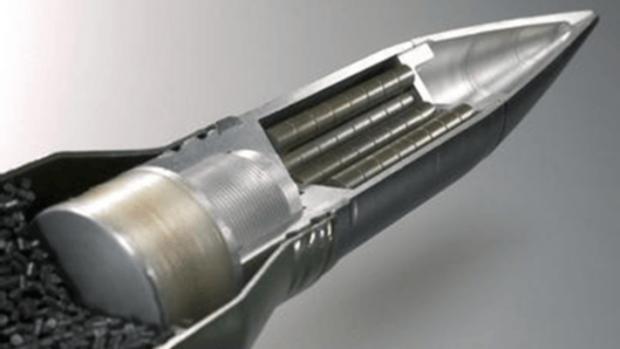
The West's Answer To Break China's Tungsten Stranglehold...
If confirmed, the operation would mark a rare instance of US strikes occurring during regular market hours. Market(ing) tactics aside, the now six-month military campaign against Iran has also exposed a critical operational vulnerability: the US military is facing an alarming shortage of advanced missiles and interceptors.
However, the crisis extends well beyond procuring replacement missiles from major defense firms. The deeper vulnerability lies farther upstream, where the rare earths and critical materials required for guidance systems, seekers, propulsion components, warheads, and interceptors remain scarce and heavily concentrated in China, even as Beijing increasingly weaponizes export controls of metals against the West.
On Monday, the Department of War said it had secured seven-year agreements with General Dynamics Ordnance and Tactical Systems and Lockheed Martin to rapidly expand US missile-production capacity and replenish depleted inventories.
The agreements are intended to increase output and accelerate deliveries of critical missile subcomponents supporting the Terminal High Altitude Area Defense (THAAD) system and the Patriot Advanced Capability-3 Missile Segment Enhancement interceptor.
#Tungsten prices surged 310% from Jan-July as China export controls squeezed supply.
— The Oregon Group (@TheOregonGroup) August 31, 2026
And, by 2030, ex-China primary mine supply still projected to be in deficit by 16,000 tonnes.
???? Tungsten price shock signals deeper supply crisishttps://t.co/enxErVsINb #mining #invest pic.twitter.com/ooovQTqibw