










Breaking News
 James Bond screen tests set to take place this weekend and Callum Turner, Slow Horses star...
 Internet faces security crisis as Anthropic chief warns it will 'get a lot worse'
 "The State Does Not Create Wealth; It Consumes It": Europe's Socialist Model Hits The
 Trump Invokes Defense Production Act To Increase Petroleum Production
Top Tech News
 They're Quietly REPLACING Our Food With THIS… And Nobody Is Talking About It!
 Chicago Opens First "Teacher-Free" AI School as Global Push Accelerates
 Solar Panels Are Doing Something Nobody Expected
 DeLorean climbs skyward to race electric flying cars
 Atari's 800XL returns with a keyboard, cartridges and BASIC
 Bioinspired robot airdrops into remote waters via morphing wing-sail
 Anduril interceptor adapts to emerging threats via swappable stages
 I Built a Website to Expose Solar and Battery Scams
 Whistleblower Issues Dire Warning: Rogue AI, Hacking Nuclear Programs...
 Multi-material insulation delivers up to 10,000 x the stiffness



Tesla's Cybercab Launch Is Next Week. Here's What Tesla Still Needs To Prove
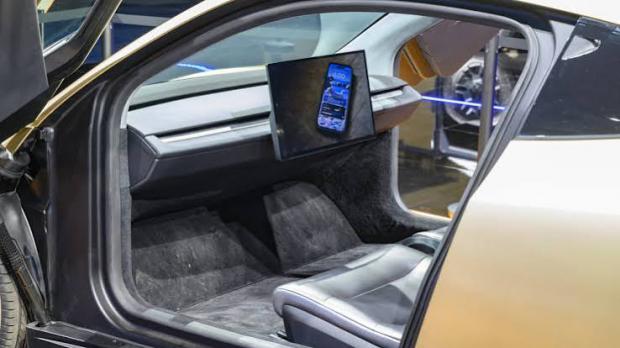
Tesla's steering wheel-free, scissor door-having Cybercab is apparently ready for primetime.
The two-seat robotaxi is getting an official launch event next Thursday in Austin, the carmaker announced this week. How quickly Cybercabs will actually hit streets—and whether you'll be able to buy one for $30,000 anytime soon—are just some of the questions hanging over this rollout.
A big one centers around software. Specifically: Is Tesla's good enough? Famously, Elon Musk is betting that he can make Tesla an autonomous-vehicle juggernaut using cameras alone. The Cybercab was built from the ground up around that gamble. But how reliable Tesla's system is at scale is still an open question. Many experts argue that sensor redundancy through lidar and radar is key for safety. Industry leader Waymo took a not-so-subtle shot at Tesla's strategy this week by saying in a blog post that cameras are "not enough" for safe autonomous driving at scale.
To Tesla's credit, its Robotaxi service does now offer driverless Model Y rides in Austin and some other markets, and that part of the business seems to be growing. On X this week, Tesla said its "unsupervised fleet is a lot bigger" and that it had extended its operating hours. Ethan McKanna of the crowdsourced Robotaxi Tracker website has detected a significant uptick in unsupervised rides, The Verge reported.
But the Robotaxi rollout has also been far more sluggish than Musk once promised. Last year, it was supposed to be "hyper exponential" and cover half the U.S. population by the end of 2025. On recent earnings calls, Musk has struck an uncharacteristically reserved tone, noting that the company is moving slowly to ensure safety. Tesla's robotic taxi business remains far behind Waymo, which has thousands of vehicles in U.S. cities and is doing more than 500,000 autonomous rides per week. To date, the Alphabet subsidiary has logged over 200 million driverless miles, while Tesla has done in the neighborhood of 380,000, per its last earnings call.
The Cybercab rollout may not actually be that fast, either. Data is part of the reason. "Because it is a new vehicle chassis," Musk said on Tesla's latest earnings call, "we need to accumulate driving data that is specific to the Cybercab before we can put a lot of them on the road." Hence why golden, human-driven Cybercabs have been spotted all over the country, with retrofitted steering wheels. We'll have to see how long that project takes. There's another reason for caution: The flashy, instantly recognizable cars will put any missteps by Tesla's autonomous system on full display.
I'd also like to know: What's going on with those wireless chargers? Tesla has said the cabs would charge wirelessly, much like a phone does, presumably so they could operate with as little human intervention (and cost) as possible. It also showed off a video of a robotic vacuum cleaning out a cab. But lately we've heard little about the infrastructure or logistics required to operate Cybercabs, and what exactly is being built. Cybercabs have also been spotted testing with a conventional charging port, so perhaps the plans have changed.