










Breaking News
 Bowne Report: Woke American Women Have Become Monsters
 In Putin Call, Trump Seeks Swift End To Ukraine War & Restoration Of US-Russia Ties
 "Lindsay Clancy is a Hero!" – A Satanic News Update
 Serious human illness transmitted by ticks has been identified
Top Tech News
 What is Going On With Robotaxi and Cybercab? Here Are All the Answers
 Floating data center would provide water and electricity to 32,000 homes
 OpenAI Cuts Off Elon's Cursor, Humanity's First Star Probe, and Trump's Nuclear Mars Shi
 Eating pollution? Plastic-to-cookie technology raises safety, environmental concerns
 Ford's $30,000 Fathom EV Truck Appears More Conventional Than Expected
 Berlin-based artist Simon Weckert explored that idea with Digital Camouflage...
 Tether expands tokenization business into Saudi Arabia, starting with real estate
 Ukraine is facing a new problem in its war with Russia:
 It charges more than it discharges while driving
  The Most Dangerous Interview Ever Recorded? PART 2


Serious human illness transmitted by ticks has been identified
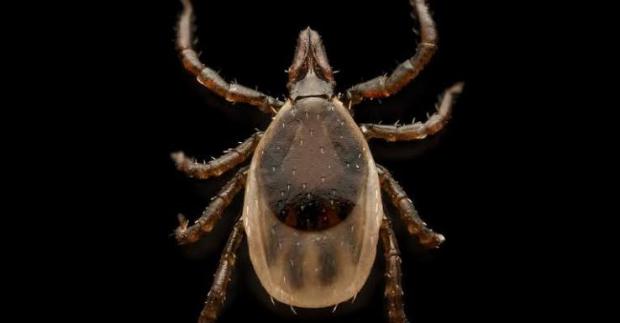
Researchers from Beijing's State Key Laboratory of Pathogen and Biosecurity identified a novel virus belonging to the genus Orthonairovirus in the blood of patients with a history of tick bites; in particular, from the Asian longhorned tick (Haemaphysalis longicornis).
The study followed a screening of 3,163 people with symptoms of the known Dabie bandavirus (DBV). Perplexed by the fact that 10.4% of the patients tested negative for the virus, scientists dug further, discovering an entirely different pathogen delivered by the same ticks.
Now known as the Asian longhorned tick nairovirus (ALTNV), it produces symptoms that are akin to influenza A – fever, fatigue, and gastrointestinal upset.
"These findings provide evidence of ALTNV as a recently identified emerging tick-borne orthonairovirus associated with human febrile illness," the researchers note in their paper. "Coinfection with DBV appears to exacerbate disease severity. The co-circulation of ALTNV and DBV in the same areas, coupled with their shared tick vector, underscores the need for improved differential diagnosis between infections."
Why does this matter? DBV has a fatality rate as high as 30%, so a novel virus delivered by the same vector is a serious epidemiological concern, even if you don't live anywhere near these ticks. Also known as thrombocytopenia syndrome (SFTS), DBV is challenging to treat. Not being bacterial, antibiotics are useless, forcing the body to rely on its immune system to do the heavy lifting.
And as we learnt from 2020, novel viruses are not what scientists like to find – but it's also important that they do.
"The cocirculation of ALTNV and DBV in the same areas, coupled with their shared tick vector, underscores the need for improved differential diagnosis between infections with these viruses in regions where SFTS is endemic," the authors write.
There were 38 patients found to be infected by both ALTNV and DBV, and they showed significantly more serious respiratory issues and kidney impairment. Seven patients died.
While H. longicornis is found across China, many of us may never come in contact with it. But given that we have no treatment for either ALTNV or DBV, and the new virus isn't a genetic mutation but entirely new, it's a reminder to take precautions when traveling and to seek medical help if you happen to experience what you feel might be the flu.
Having personally experienced emergency hospital treatment in China, it's not just affordable for tourists but, in this case, could be life-saving.