










Breaking News
 Trump posts map showing US takeovers of other nations
 The Right's Long March Toward Illiberalism
 Iran claims it seized a US 'smart' unmanned submarine near Hormuz as tensions escalate
 When you see Nike's marketing team, the company downfall makes perfect sense…
Top Tech News
 OPTIMUS CONFIRMED: 15,000 Bots This Year -- Tesla to $3,000
 What is Going On With Robotaxi and Cybercab? Here Are All the Answers
 Floating data center would provide water and electricity to 32,000 homes
 OpenAI Cuts Off Elon's Cursor, Humanity's First Star Probe, and Trump's Nuclear Mars Shi
 Eating pollution? Plastic-to-cookie technology raises safety, environmental concerns
 Ford's $30,000 Fathom EV Truck Appears More Conventional Than Expected
 Berlin-based artist Simon Weckert explored that idea with Digital Camouflage...
 Tether expands tokenization business into Saudi Arabia, starting with real estate
 Ukraine is facing a new problem in its war with Russia:
  It charges more than it discharges while driving


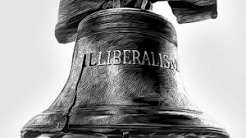
The Right's Long March Toward Illiberalism
Several years ago, at a Philadelphia Society meeting, a friend approached me. He identified as a national conservative and believed that the Right needed to use the coercive power of the state to make the country more virtuous. He was mainly concerned about the supposed degradation of our culture and insisted that we needed a strong, authoritative leader to restore America to its former greatness. I adamantly disagreed, while conceding that we needed to work to restore the country's institutions, including the balance of power through proper checks and balances.
He laughed and asked me if I knew what time it was. I looked at my watch and told him the time. He laughed again. I didn't know what time it was.
For my friend, the time had long passed for reforming institutions, preserving our constitutional framework, and maintaining a minimal state. The time had come for conservatives to be radical. It was time to break the existing framework and for conservatives to wield power against their enemies.
I left that conversation deeply troubled and concerned about the rise of the illiberal, perhaps fascist, New Right. How did this happen? What happened to reasonable conservatives dedicated to conserving the American Founding?
Thanks to Laura Field's Furious Minds: The Making of the MAGA New Right, we now have a history of the intellectuals behind the conservative movement's shift toward illiberalism. Field's stated purpose "is not to examine historical precursors to the New Right; I focus on the intellectual world that has grown up under the cover of Trumpism more than on the intellectual roots of these changes." Trained as a Straussian political theorist, Field is uniquely qualified to read, understand, and communicate the ideas of the New Right intellectuals who have been challenging the Enlightenment liberal foundation of the United States.
Field — a political theorist, writer, analyst, and scholar in residence at the Niskanen Center — breaks the New Right into four distinct categories. First, there are the National Conservatives (or NatCons), who encompass most, but not all, of the figures Field discusses. National Conservatism rejects globalization, free trade, and limited government in favor of economic nationalism, protectionism, anti-immigration policies, and aspects of Christian nationalism. This is the most moderate and mainstream subset of the New Right, and it includes figures such as Kevin Roberts, Yoram Hazony, Josh Hawley, and Christopher Rufo. At this point, the Heritage Foundation, the Edmund Burke Foundation, and First Things are all essentially national conservative in nature.
The next group is the postliberals. This group consists primarily of radical and integralist Catholics who deplore and critique liberalism's emphasis on individual rights and its claims of procedural neutrality. The most well-known figures in this school are Patrick Deneen, Adrian Vermeule, Sohrab Ahmari, and JD Vance. They attack secular pluralism, and their goal is to limit individual liberty and rights. Instead, they advocate for an illiberal vision of "the common good" and the promotion of "traditional morality" by the state.