










Breaking News
 Sea Shells, Paper or Salt As Money?
 There have been no hurricanes in the Atlantic -- Yet! Making 2026 the quietest since satellite...
 Tyranny by Technicality: The Supreme Court Will Not Save Our Republic
 'Climate Terrorism': Manhunt Arrest in Germany Over Rocket Attacks Against High Voltage Powe
Top Tech News
 Chinese Concept Video Imagines the Future of Warfare
 OPTIMUS CONFIRMED: 15,000 Bots This Year -- Tesla to $3,000
 What is Going On With Robotaxi and Cybercab? Here Are All the Answers
 Floating data center would provide water and electricity to 32,000 homes
 OpenAI Cuts Off Elon's Cursor, Humanity's First Star Probe, and Trump's Nuclear Mars Shi
 Eating pollution? Plastic-to-cookie technology raises safety, environmental concerns
 Ford's $30,000 Fathom EV Truck Appears More Conventional Than Expected
 Berlin-based artist Simon Weckert explored that idea with Digital Camouflage...
 Tether expands tokenization business into Saudi Arabia, starting with real estate
 Ukraine is facing a new problem in its war with Russia:


Tyranny by Technicality: The Supreme Court Will Not Save Our Republic
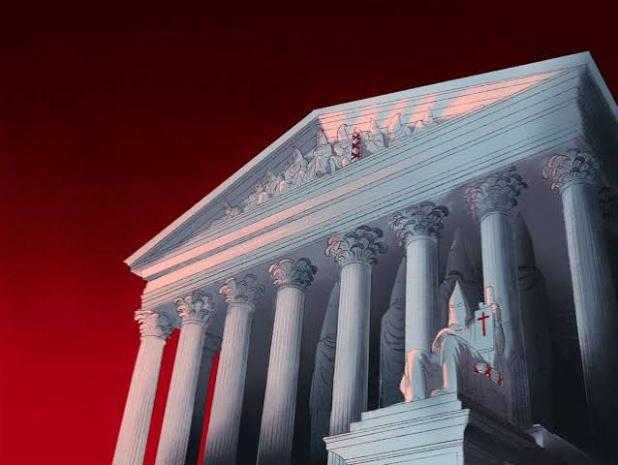
For years, we have been warning that the U.S. Supreme Court would not save us from the American police state.
That warning has not grown less urgent. It has simply become more complicated.
The danger today is not merely that courts will favor order and procedure over freedom. It is that by the time justice makes an appearance, it will arrive so narrowly, so procedurally and so late that the government will already have prevailed.
Consider the fight over President Trump's massive $400 million White House ballroom.
Lower courts found serious reason to doubt Trump's claim to unilateral authority to tear down the historic East Wing and proceed with the project without congressional approval, and they ordered above-ground construction halted.
Those orders were stayed while the administration appealed.
Construction continued.
Then the administration argued that the project had progressed so far that stopping it had become impractical.
On August 31, the U.S. Supreme Court, by a 5–4 vote, allowed the construction to continue—not because it determined that Trump had acted legally, but because the majority concluded that the preservationists challenging the project likely lacked legal standing to sue.
The Supreme Court expressly declined to decide whether the project itself was lawful.
Chief Justice John Roberts, joining the Court's three liberal justices in dissent, warned that allowing the project to proceed was "no victory for the separation of powers."
Therein lies the problem with justice in the age of the American police state: by the time the courts finally decide whether government officials have overstepped their constitutional authority, the deed may already be done, the right already violated and the damage already inflicted.
The building is already gone. The troops are already deployed. The surveillance system is already operating. The people are already detained. The agency is already dismantled. The data is already collected. The war is already underway.
And whatever constitutional principle eventually emerges from the litigation arrives too late to undo the damage.
At what point will "We the People" be told that we, too, lack standing to object to the destruction of our republic?
The Founders built safeguards into the constitutional system to guard against any one branch of government becoming all-powerful: If the president overreaches, Congress is supposed to stop him. If Congress fails to do its duty, the courts are supposed to intervene. If a lower court gets it wrong, the Supreme Court will set things right.