










Breaking News
 10-Year Yield Hits Multi-Year High, Long Bond Tops 5.3 Percent, Oil Surges
 Interview 2037 – 9/11 + 25 = New World Next Week (NWNW #643)
 Trump proposes excluding millions of noncitizens from key 2030 US Census figures
 Pakistan warns Iran to 'rein in Houthis' as Saudi Arabia plans to retaliate: Report
Top Tech News
 Chinese Concept Video Imagines the Future of Warfare
 OPTIMUS CONFIRMED: 15,000 Bots This Year -- Tesla to $3,000
 What is Going On With Robotaxi and Cybercab? Here Are All the Answers
 Floating data center would provide water and electricity to 32,000 homes
 OpenAI Cuts Off Elon's Cursor, Humanity's First Star Probe, and Trump's Nuclear Mars Shi
 Eating pollution? Plastic-to-cookie technology raises safety, environmental concerns
 Ford's $30,000 Fathom EV Truck Appears More Conventional Than Expected
 Berlin-based artist Simon Weckert explored that idea with Digital Camouflage...
 Tether expands tokenization business into Saudi Arabia, starting with real estate
 Ukraine is facing a new problem in its war with Russia:


Ballot seizures seemed impossible. But judges and officials are prepping for them now
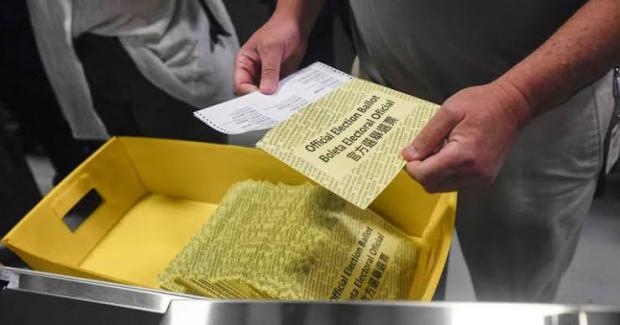
Now, as President Trump continues his unprecedented hunt for voter fraud, ballot seizures and search warrants are scenarios voting officials and the legal community are actively preparing for.
One state election official, who did not have permission to speak publicly, told NPR their office has led three separate statewide trainings this year to prepare for the possibility of law enforcement seeking to take possession of ballots or election materials while the election is ongoing.
And UCLA's Safeguarding Democracy Project released a guide Wednesday, shared first with NPR, to help judges navigate search warrant affidavits related to the voting process.
"Lots of things that were off the table are now on the table," said Rick Hasen, the director of the Safeguarding Democracy Project, and the guide's lead author.
Trump has said he regrets not pushing harder for the federal government to seize election equipment after the 2020 election. Already this year, two different search warrants, executed in Fulton County, Ga., and Riverside County, Calif., involved the seizure of ballots.
All that has voting officials preparing for different worst case scenarios this fall.
"This is the thing we really fear," the state voting official, whose state has conducted the trainings, said in a previous interview with NPR. "[Say] we have really close races [in our competitive districts] then the DOJ, FBI come knocking on one of our county doors and they say, 'We believe there's hijinks going on, we're going to confiscate all the ballots so we can count them.'"
If a warrant were served and ballots were seized before an election is certified, it's possible voting officials wouldn't be able to confidently know how many ballots were returned, or whether the ones that were seized were tampered with.
In elections, this is known as breaking the chain of custody.
"They could do so much damage if they did that," the official said.
Legal experts say it is still an extreme and unlikely scenario. Notably because there is a last line of defense that must sign off on any attempt to seize ballots: a judge.
"Right now, the judiciary writ large has their antennae up, anticipating what might be coming down the pike," said retired federal Judge Philip Pro, who served as the chief judge for the District of Nevada. "They're going to be prepared."
An affidavit isn't "gospel"
The warrant executed at the elections office in Fulton County, Ga., was a wake-up call for the legal community not solely because it happened, but because how it was approved.
"Eventually we got to see the search warrant and it confirmed some of our worst fears," said Hasen. "It contained information about potential fraud in Georgia that was based on discredited conspiracy theories."