










Breaking News
 Trump Explains Why He's Okay With North Korea Having Nukes, But Not Iran
 Hegseth Reveals "AutoWarCom" As $74 Billion Drone Splurge May Ignite This Stock
 Treasury Yield 30 Years (^TYX)
 40 Percent Error Rate Found In Afghan Refugee Vetting Samples, Inspector General Finds
Top Tech News
 Med Beds Just Took a MASSIVE Step Forward, Healing People in Days!
 Palmer Luckey: Autonomous Weapons Are Ancient and Why Anduril Won't Build Humanoids | EP #295
 A laser just photographed objects through six feet of concrete
 Elon Musk's Next-Gen Motor Destroy Entire EV Industry
 China's disputed satellite refueling heralds new space war era
 BYD Will Put Solid-State Batteries In An EV Next Year: Executive
 FDA-cleared exoskeleton puts spinal-cord patients back on their feet
 Your Robotic Vacuum Is Watching You -- Could It Someday Testify Against You in Court?
 Why Unigrid's Sodium-Ion Batteries Are the Game-Changer for Off-Grid Energy Storage
 This Battery On Wheels Makes Any Diesel Truck Electric In 5 Minutes



Dangerous Cosmetics Alert: Why Stearalkonium Chloride and Synthetic Colors Are Chemtrails...
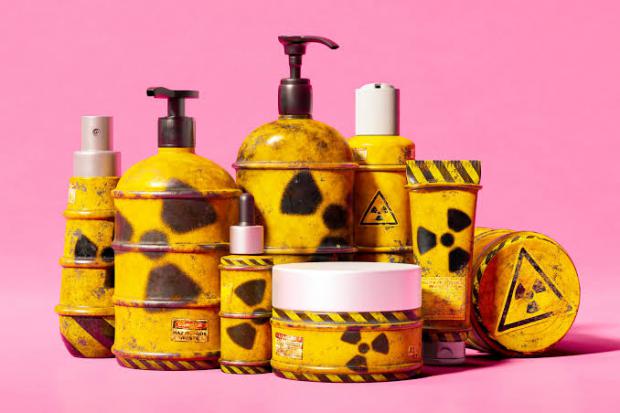
Cosmetics are often marketed as products that make hair, skin and appearance look healthier, but the ingredient lists can tell a less appealing story.
Among the chemicals that deserve closer attention are stearalkonium chloride and synthetic colors. These substances serve practical formulation purposes, yet their potential for irritation, allergic reactions and unnecessary chemical exposure raises questions for consumers seeking simpler personal-care products.
What Is Stearalkonium Chloride?
Stearalkonium chloride is a "quaternary ammonium compound", commonly called a "quat." Its INCI name is stearalkonium chloride, while its chemical name is benzyldimethyl(octadecyl)ammonium chloride.
It is also identified by CAS No. 122-19-0.
The ingredient carries a positive electrical charge that allows it to adhere to the negatively charged surface of hair. This makes it useful as an antistatic and conditioning agent, helping hair feel smoother, more manageable and easier to comb.
It is particularly common in conditioners, deep-conditioning treatments, hair masks and some styling products. Scientific literature on hair care identifies stearalkonium chloride among the quaternary conditioners used to reduce static and improve hair feel.
Stearalkonium chloride can also function as a surfactant and antimicrobial ingredient. Cosmetic ingredient databases list antistatic, preservative and surfactant functions.
Is Stearalkonium Chloride Toxic?
The picture is more complicated than simply labeling the ingredient "toxic." A Cosmetic Ingredient Review safety assessment concluded that stearalkonium chloride was safe for use in cosmetics at concentrations similar to those then marketed, and patch testing did not identify it as a significant sensitizer in the tested conditions
However, that does not mean the substance is entirely without concern. Concentration and exposure matter, and quaternary ammonium compounds can produce irritation under sufficiently concentrated conditions. The historical safety assessment also reported animal toxicity data at substantially higher exposures than those normally encountered in cosmetics.
For consumers with particularly reactive skin or a history of contact dermatitis, avoiding unnecessary quaternary ammonium ingredients may therefore be a reasonable precaution.
The broader concern is not that ordinary conditioner use has been proven to cause systemic poisoning, but that an ingredient with limited cosmetic necessity can contribute to irritation or unwanted exposure in susceptible individuals.
What Are Synthetic Colors?
Synthetic colors are manufactured dyes and pigments used to give cosmetics their distinctive shades. They may appear on labels as names such as FD&C Blue No. 1, FD&C Yellow No. 5, FD&C Red No. 40, D&C Red No. 7 or simply abbreviated color names and numbers.