










Breaking News
 EXCERPTS: Citigroup Inc. received approval to launch a wholly-owned securities business...
 The Crown Wants It Kept Secret: AG Asks the Federal Court to Seal Information...
 The Supreme Court Just Denied Your Constitutional Rights
 The state is trying to crush the Amish with ruinous penalties.
Top Tech News
 Genetically Engineered War Dogs for 134 Pound Cyborg Dire Wolves Now – Later 600 Pound Wolves
 They're Quietly REPLACING Our Food With THIS… And Nobody Is Talking About It!
 Chicago Opens First "Teacher-Free" AI School as Global Push Accelerates
 Solar Panels Are Doing Something Nobody Expected
 DeLorean climbs skyward to race electric flying cars
 Atari's 800XL returns with a keyboard, cartridges and BASIC
 Bioinspired robot airdrops into remote waters via morphing wing-sail
 Anduril interceptor adapts to emerging threats via swappable stages
 I Built a Website to Expose Solar and Battery Scams
 Whistleblower Issues Dire Warning: Rogue AI, Hacking Nuclear Programs...



Twenty-five years of "temporary": how 9/11 built a surveillance state Americans never vote
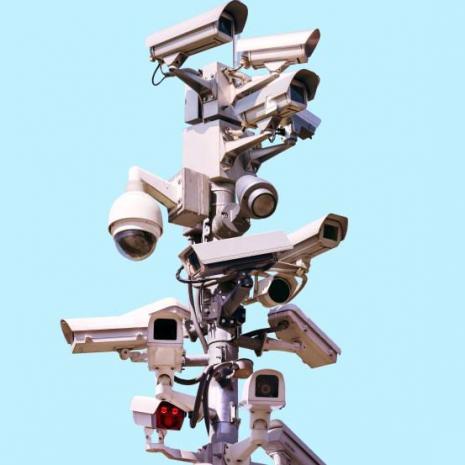
A quarter-century after September 11, 2001, the emergency measures that the federal government swore were only temporary have calcified into a permanent architecture -- an alphabet soup of agencies, a legal doctrine of pre-emption, and a surveillance apparatus so pervasive that privacy has become less a right than a nostalgic memory.
What began as a promise to hunt down nineteen hijackers metastasized into a standing machinery for watching, cataloguing, and controlling the American public itself. The uncomfortable truth, twenty-five years on, is that the terrorists succeeded in one respect the history books rarely admit: they goaded the United States into dismantling pieces of its own constitutional order, and the country did the rest of the work willingly.
Key points:
Congress passed the USA PATRIOT Act just 45 days after 9/11, with little debate, expanding wiretapping, secret "sneak and peek" searches, and information-sharing among federal agencies.
The Homeland Security Act of 2002 merged 22 existing agencies and roughly 170,000 employees into a single new Cabinet department, the largest federal reorganization since the Pentagon was created.
Edward Snowden's 2013 disclosures revealed the NSA was secretly collecting the phone metadata of hundreds of millions of Americans under Section 215 of the Patriot Act, a program later ruled unlawful by a federal appeals court.
Bank Secrecy Act provisions folded into the Patriot Act forced banks to flag "suspicious" customer activity, expanding financial surveillance far beyond terrorism finance.
Fusion centers, no-fly lists, and military-grade equipment transfers to local police blurred the line between foreign battlefield and American neighborhood.
Despite the expired sunset clauses on parts of the Patriot Act, the infrastructure it built largely remains intact today.
A bill nobody had time to read
Speed was the point. Attorney General John Ashcroft gave lawmakers roughly a week to pass the administration's surveillance package without amendment, and Congress obliged, sending the USA PATRIOT Act to President George W. Bush's desk on October 26, 2001, barely six weeks after the attacks. There was no conference report, no meaningful floor debate, none of the deliberative friction the founders built into the legislative process specifically to prevent panic from calcifying into tyrannical law. The bill expanded wiretapping and pen-register authority, loosened the rules governing so-called sneak-and-peek searches that let agents enter a home or business without immediately notifying the occupant, and the bill tore down the wall that had separated law enforcement records from intelligence files.
Section 215, the so-called "business records" provision, would prove the most consequential. It let federal investigators demand a sweeping range of records, library check-outs, bookstore purchases, medical files, etc., without the traditional, constitutional showing of individualized suspicion that a warrant requires. Sixteen provisions of the original act carried sunset clauses meant to force Congress to revisit them after four years. When the deadline arrived in 2006, lawmakers made fourteen of those provisions permanent outright. The temporary had already become the routine.