










Breaking News
 Florida Governor Ron DeSantis offers 'asylum' to Lindsay Clancy holdout juror...
 Yemen Blame Game Begins: "Saudi-American F**k Up Of Epic Proportions"
 WATCH: Trump Calls Out Zelensky for Targeting Russian Diesel Refineries:
 Trump Admin Weighs Emergency Powers To Boost Refining As Diesel Tops $6
Top Tech News
 NASA Super Light Solar Sail Project Will Be 12-40 Times Lighter and Faster
 Space Telescope Interferometer to Image Exoplanet Continents
 Twenty-five years of "temporary": how 9/11 built a surveillance state Americans never vote
 I'll Never Buy Another WALMART Battery!
 Shoei GT-Air 3 Smart helmet drops with built-in AR for $1,500
 Freezable titanium plate keeps your cooler chilled way longer than ice packs
 Review: Affordable thermal device is made for discovering life outdoors
 AI Whistleblower Tells Tucker How AI Could Kill All Humans by 2040
 You Hate Flock? Well There's More...
 Will Spiking Diesel Prices Drive Autonomous Trucking?



Bernanke Saved the System, Not the Economy
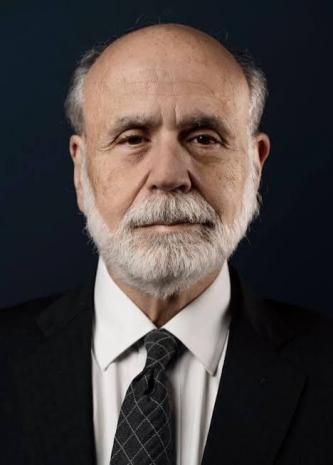
Former Fed Chair Ben Bernanke is celebrated for the unprecedented interventions that supposedly saved the economy from depression after the 2008 financial meltdown, expanding the Fed's role well beyond its traditional purchase of short-term treasury bills into buying private stocks, mortgage securities, and long-term government debt. Rather than allowing the malinvestments of the housing boom to be liquidated, Bernanke's Fed propped up assets the market had already declared worthless, setting a precedent for the ever-expanding quantitative easing that later administrations continued and leaving the economy addicted to easy money.
The following article was originally published by the Mises Institute. The opinions expressed do not necessarily reflect those of Peter Schiff or SchiffGold.
As the US economy stumbles through rounds of inflation and self-inflicted crises, a look backward might be appropriate. To those that say we only should look to the future, the Federal Reserve's history of the last two decades tells us that governmental and monetary authorities will do the wrong thing and make things worse. It is time to scrutinize the past.
In a recent article, I wrote about how the government almost always takes the wrong approach after a recession begins, which extends a recession and makes things worse, especially in the long run. Unfortunately, any politician or government agent (and especially a president) who does not openly intervene in the economy during a recession is accused of following a "do-nothing" strategy, which is tantamount to wanting people to starve to death.
As Murray Rothbard demonstrated in America's Great Depression, Herbert Hoover intervened in the economy following the aftermath of the 1929 stock market crash more than any president had previously done. However, the typical academic, political, and media presentations of him almost unanimously portray him as a die-hard, free enterprise advocate who preferred "rugged individualism" instead of doing what was necessary to stop the economy from falling into depression. When historians and most economists are confronted with the fact that the Great Depression persisted throughout the 1930s despite the massive interventions of Franklin Roosevelt's New Deal, they respond that the depression as a "natural" phenomenon that no one could have foreseen or stopped, with the New Deal seen as helping to mitigate the worst aspects of the depression.
One person who intervened mightily was Ben Bernanke, who was chairman of the Federal Reserve System in 2008 when financial markets melted down with the collapse of the Housing Bubble. Bernanke's interventions, which were unprecedented at the time, involved having the Fed buy massive amounts of securities that went well beyond the central bank's historical purchase of six-month treasury bills.
As the Fed became increasingly involved in the economy, the accolades for Bernanke followed. Time made him the 2009 Person Of the Year, declaring:
But Bernanke also knows the economy would be much, much worse if the Fed had not taken such extreme measures to stop the panic. There's a vast difference between 10% and 25% unemployment, between anemic and negative growth. He wishes Americans understood that he helped save the irresponsible giants of Wall Street only to protect ordinary folks on Main Street. He knows better than anyone how financial crises spiral into global disasters, how the grass gets crushed when elephants fall. "We came very, very close to a depression. . . The markets were in anaphylactic shock," he told TIME during one of three extended interviews. "I'm not happy with where we are, but it's a lot better than where we could be."
Certainly, Bernanke's actions were "bold" in that they went well beyond where any Fed chairman had gone before, even beyond Alan Greenspan's pushing the Federal Funds rate to one percent to counter the recessionary conditions that followed the collapse of the Tech Bubble in 2001, as well as to promise "liquidity" to Wall Street banks should there be a financial crisis, the infamous "Greenspan Put," later to be called the "Greenspan-Bernanke Put." As one can see from the Time quote, it is taken, frankly, as an article of faith that unless Bernanke had massively intervened the economy would have sunk to depression levels of unemployment—and stayed there indefinitely. Indeed, Newsweek called Bernanke "The Man Who Saved the Economy."