










Breaking News
 Roger Waters on 9/11 Lies, Zionism, and AI Music
 SICK: Leftists Vandalize Newly Unveiled Charlie Kirk Statue at TPUSA Headquarters in Phoenix...
 Sick Coach Kara Lawson Benches Caitlin Clark for FIBA Final – Should Be Investigated – USA Wins.
 Hormuz Deal Hits Snag: Monday's Gulf-Iran Shipping Talks "Postponed"
Top Tech News
 NASA Super Light Solar Sail Project Will Be 12-40 Times Lighter and Faster
 Space Telescope Interferometer to Image Exoplanet Continents
 Twenty-five years of "temporary": how 9/11 built a surveillance state Americans never vote
 I'll Never Buy Another WALMART Battery!
 Shoei GT-Air 3 Smart helmet drops with built-in AR for $1,500
 Freezable titanium plate keeps your cooler chilled way longer than ice packs
 Review: Affordable thermal device is made for discovering life outdoors
 AI Whistleblower Tells Tucker How AI Could Kill All Humans by 2040
 You Hate Flock? Well There's More...
 Will Spiking Diesel Prices Drive Autonomous Trucking?



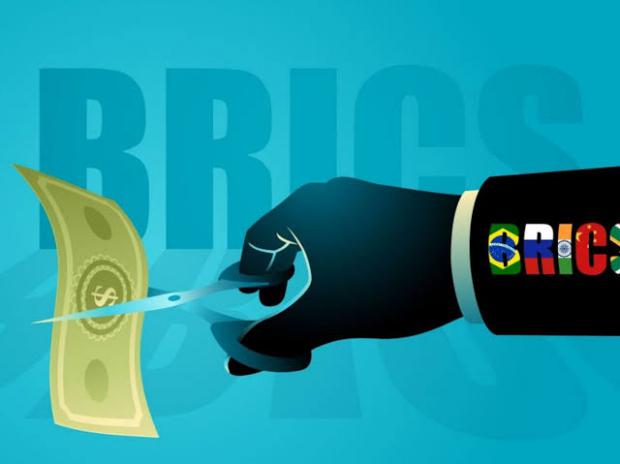
BRICS Steps Off The Dollar, With Iran Pressing Hardest
For most members the move was incremental.
For Iran — under sweeping US sanctions, a naval blockade, and roughly six months into a war with the United States and Israel — it was closer to a lifeline.
The declaration and the payment rails
Leaders gathered at the Bharat Mandapam convention center adopted the New Delhi Declaration 2026 unanimously on the opening day, with Prime Minister Narendra Modi emerging from a closed session to report that no member had objected to the text. The economic centerpiece was a commitment to expand trade and investment settled in members' own national currencies, and to link their domestic payment and messaging systems so that transactions can move without passing through the dollar-denominated SWIFT network. According to the declaration, the bloc's payment task force had studied cross-border interoperability of those channels and examined using local currencies for trade settlement and investment.
The mechanism drawing the most attention was BRICS Pay, a decentralized payment-messaging framework that stitches together India's UPI, China's CIPS, and Russia's SPFS into a shared interoperability layer — a way to clear payments among members outside SWIFT. The declaration also referenced a pilot for a gold-backed "Unit" token.
Just as telling was what the bloc again declined to do. There was no endorsement of a single common BRICS currency; India in particular has resisted that leap, favoring interoperable national-currency settlement over the political and monetary complexity of a shared unit. The result, as several observers characterized it, is incremental financial de-dollarization rather than a monetary union — plumbing, not a new reserve currency.
Washington's answer
The response from Washington was immediate. President Trump threatened tariffs of up to 100% on the bloc, extending a pressure campaign he has waged all year against what he calls BRICS's "anti-American" trajectory. The threat carries genuine weight for export-dependent members that rely on the US market — but its deterrent power erodes with each transaction the bloc succeeds in routing through non-dollar channels.
That is the paradox Washington now faces: the tariffs are meant to punish de-dollarization, yet de-dollarization is precisely what blunts the tariffs.