










Breaking News
 Roger Waters on 9/11 Lies, Zionism, and AI Music
 SICK: Leftists Vandalize Newly Unveiled Charlie Kirk Statue at TPUSA Headquarters in Phoenix...
 Sick Coach Kara Lawson Benches Caitlin Clark for FIBA Final – Should Be Investigated – USA Wins.
 Hormuz Deal Hits Snag: Monday's Gulf-Iran Shipping Talks "Postponed"
Top Tech News
 NASA Super Light Solar Sail Project Will Be 12-40 Times Lighter and Faster
 Space Telescope Interferometer to Image Exoplanet Continents
 Twenty-five years of "temporary": how 9/11 built a surveillance state Americans never vote
 I'll Never Buy Another WALMART Battery!
 Shoei GT-Air 3 Smart helmet drops with built-in AR for $1,500
 Freezable titanium plate keeps your cooler chilled way longer than ice packs
 Review: Affordable thermal device is made for discovering life outdoors
 AI Whistleblower Tells Tucker How AI Could Kill All Humans by 2040
 You Hate Flock? Well There's More...
 Will Spiking Diesel Prices Drive Autonomous Trucking?



Trump's Grid Battery Ban Leaves Developers Guessing
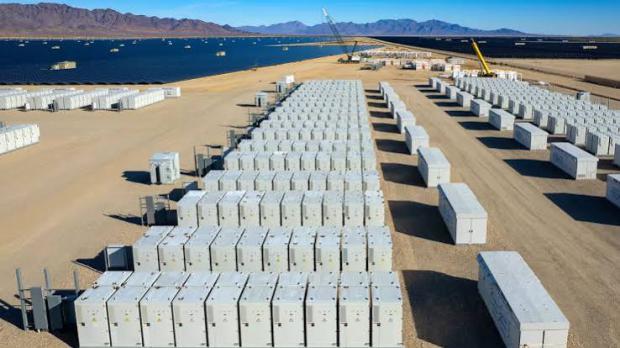
China dominates global supply chains for clean energy tech in general, but especially when it comes to lithium-ion batteries, which power everything from your phone to your car. Approximately 80 percent of all battery cells in the world are made in China according to figures from the International Energy Agency. What is more, Beijing controls the production of EV battery cathode active material (85 percent of global production) and anode active material (more than 90 percent), and refines the vast majority of the critical minerals involved in their manufacturing.
The Trump administration is eager to challenge Beijing's outsized presence in the global energy sector as part of its stated goal to establish "energy dominance." Toward the end of August, the Trump administration declared a national emergency that effectively bars the use of Chinese-made batteries in grid-scale energy storage systems, pointing to cybersecurity concerns as the rationale. In the same month, the federal government awarded $500 million in funding to seven companies working on battery minerals, manufacturing, and recycling with the express purpose of building up the domestic sector in order to reduce reliance on Chinese supply chains.
However, these measures are falling short. Way short. "It takes decades and tens, if not hundreds of billions of dollars" to build the kind of supply chains that would be capable of competing with China according to Tu Le, founder and managing director of Sino Auto Insights. "We don't have decades. We have five, six, seven years to try to become competitive," he was recently quoted by Quartz.
"We have a ton of innovation coming out of the United States," Le went on to say. "These small fledgling companies are super innovative, but getting and building prototypes of what they're trying to sell is one thing. Being able to mass produce them at a high quality level, repeatably in the millions of units is another thing entirely."
Moreover, critics have pointed out that the August 26 executive order is vaguely worded, calling for the ban of "any foreign-produced bulk-power system electric equipment", and may only serve to slow down the growth of the domestic energy storage sector. Analysis from BloombergNEF notes that, as a result of the state of emergency and the uncertainty around its terms, battery projects "face near-term delays or cancellations as developers await guidance, reconsider existing contracts, or shift suppliers."
The effort may also be too little, too late to make up for the damage that the Trump administration has already done to the domestic battery manufacturing sector by rolling back critical Biden-era supportive legislation. Repealing laws supporting domestic manufacturers and the EV sector as a whole (which is far and away the largest market for these batteries on a global scale) has cost U.S. battery manufacturers time and money when both are in short supply.