










Breaking News
 Hard Choices...
 WHO Kills MAHA-Backed Hepatitis B Baby Vaccine Trial
 Lula Leads After Last-Minute Voting Extension As "Bolsonaro Trade" Implodes
 Grok Bot Tutorial: Beginner to Genius (Full Walkthrough)
Top Tech News
 Modular phone promises total privacy at the flick of a switch
 Genetically Engineered War Dogs for 134 Pound Cyborg Dire Wolves Now – Later 600 Pound Wolves
 They're Quietly REPLACING Our Food With THIS… And Nobody Is Talking About It!
 Chicago Opens First "Teacher-Free" AI School as Global Push Accelerates
 Solar Panels Are Doing Something Nobody Expected
 DeLorean climbs skyward to race electric flying cars
 Atari's 800XL returns with a keyboard, cartridges and BASIC
 Bioinspired robot airdrops into remote waters via morphing wing-sail
 Anduril interceptor adapts to emerging threats via swappable stages
 I Built a Website to Expose Solar and Battery Scams


Volkswagen Just Unveiled The Most Efficient EV Ever Tested
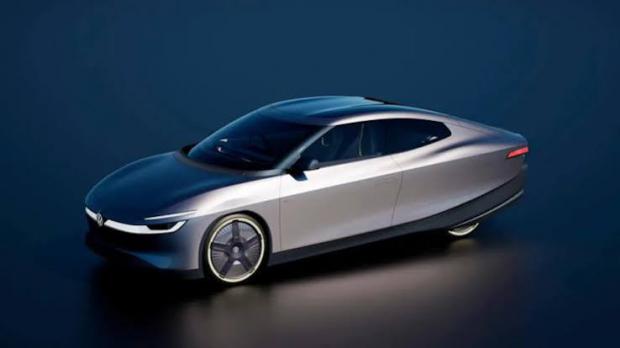
Volkswagen knows a thing or two about making efficient cars, and its latest creation proves the German automaker still has a knack for building slippery cars. This is the Mission Efficiency, a two-door electric reinterpretation of the iconic XL1 of the early 2010s that just set three new records.
Under the skin, the slippery EV uses the same MEB+ underpinnings as the wildly popular ID. Polo urban hatchback, but turns the efficiency knob to its highest level. With a drag coefficient of 0.158, Volkswagen claims the Mission Efficiency is the most aerodynamic road-legal car ever built. By comparison, the ill-fated Lightyear had a Cd under 0.19, while the original XL1 had a drag coefficient of 0.186.
To make that happen, Volkswagen designed a frontal area that totals just 22.4 square feet (2.08 square meters) and gave it three active cooling flaps that can open individually or together in five configurations. The four-seat concept achieves its record-setting drag coefficient with all three flaps closed.
Specially designed wheel deflectors also make an appearance, preventing air from creating turbulence, especially around the rear wheels, which are almost completely covered. A set of bespoke Continental tires based on the EcoContact 7 provides low rolling resistance, thanks in part to the aerodynamically optimized sidewalls.
The underside is also completely covered to keep it as aerodynamic as possible, and the rear axle has been narrowed by 6.7 inches (170 millimeters) compared to the ID. Polo. All to improve airflow under the car and accommodate a narrower rear end that improves the drag coefficient.
The result of all this work is impressive. Volkswagen drove the two-door EV on real roads from its development center in Wolfsburg, Germany, to Vienna, Austria, via Poznan, Poland, and Olomouc, Czechia. The car was recharged just once during the 794 miles (1,278.36 kilometers) trip, and it still had 102 miles (164 km) of range left, putting the total theoretical range at over 870 miles (1,400 km).
During the trip, the Mission Efficiency concept reached a top speed of 86 miles per hour (138 kilometers per hour), averaging 42 mph (67.7 kph). Meanwhile, the energy consumption, including charging losses, was 7.51 kWh/100 km (12 kWh/100 miles or 7.51 miles/kWh). Without charging losses, the figure is even lower: 6.89 kWh/100 km (11 kWh/100 miles or 9 miles/kWh). But it gets even better, as the engineering team wanted to squeeze everything out of the new concept.
An "ideal drive" at a constant 42 mph (68 kph) on flat ground and with all the auxiliary systems switched off, including AC, resulted in a record average consumption of 6.48 kWh/100 km (9.58 kWh/100 miles or 9.58 miles/kWh).