










Breaking News
 Cheap smartphone add-on pinpoints hidden cameras to shut down spies
 The $600 Tank That Beats a $10,000 Powerwall
 What The Hell Is Happening w/ Charlie Robinson
 This Week in World Warfare
Top Tech News
 Terrifying AI Behavior Even Its Creators Couldn't Explain
 WW3 Near-Miss? AI Hallucinated Nuclear Weapons Components Aboard Chinese Vessel Bound For Iran
 Stripe Is Building the Toll Road for the Machine Economy
 Toyota Dakar hopeful swaps twin-turbo V6 for hydrogen fuel cells
 4-min turbo-inflatable cubic camp castle is now available in the USA
 Researchers Used Claude To Hack OpenAI Employee Accounts
 Chinese Scientists Develop New Oil Refining Method That Cuts Energy Use by 90%
 World's smallest CT scanner fits in the palm of your hand
 The Tesla Roadster will blow people's minds
 Peter Thiel-Funded Company Anduril to Triple the Number of Autonomous Surveillance Towers...



Why Do We Pay Farmers to Grow Food Nobody Eats? | Joel Salatin
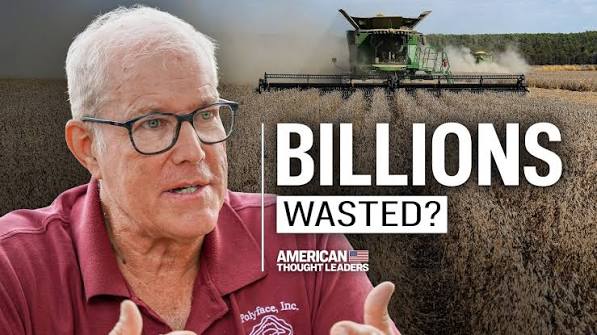
Joel Salatin, co-owner of Polyface Farms, argues that looking closely at soaring beef prices, local meat production, and farm economics reveals regulatory hurdles that destroy small slaughterhouses and distort true free-market prices.
Salatin addresses why high beef prices persist, noting recent droughts, aging farmers, the length of the cattle cycle, and the closing of Mexico's borders. Far from being against market efficiency, he argues that resilient, local production would more accurately respond to market fluctuations and supply shortages.
In this interview, Salatin answers critical questions: How do massive corn and soybean subsidies skew beef prices and drive small cattle operations out of business? What do USDA inspection exemptions like the Prime Act reveal about intrastate commerce and food safety? And why is nature's model of scaling through duplication far more effective than industrial centralization?
Views expressed in this video are opinions of the host and the guest, and do not necessarily reflect the views of The Epoch Times.