










Breaking News
 Man vs robot: Influencer takes on 6ft humanoid in a terrifying cage fight...
 Dystopian moment driverless Waymo car decides to drive THROUGH upscale Colorado farmers' market
 Category 5 hurricane explodes in the Pacific as models reveal potential path toward several...
 Despite German State Stimulus: Machinery Industry Braces For A Catastrophic Year
Top Tech News
 BEYOND THE MOON: NASA plans a nuclear-powered fleet to push DEEPER into space
 Big Oil Backs Mazama's $135 Million Bet On Superhot Geothermal
 Quantum compass takes flight on Northrop's Lumberjack drone
 Terrifying AI Behavior Even Its Creators Couldn't Explain
 WW3 Near-Miss? AI Hallucinated Nuclear Weapons Components Aboard Chinese Vessel Bound For Iran
 Stripe Is Building the Toll Road for the Machine Economy
 Toyota Dakar hopeful swaps twin-turbo V6 for hydrogen fuel cells
 4-min turbo-inflatable cubic camp castle is now available in the USA
 Researchers Used Claude To Hack OpenAI Employee Accounts
 Chinese Scientists Develop New Oil Refining Method That Cuts Energy Use by 90%



Joby Completes First Autonomous Flight Across US
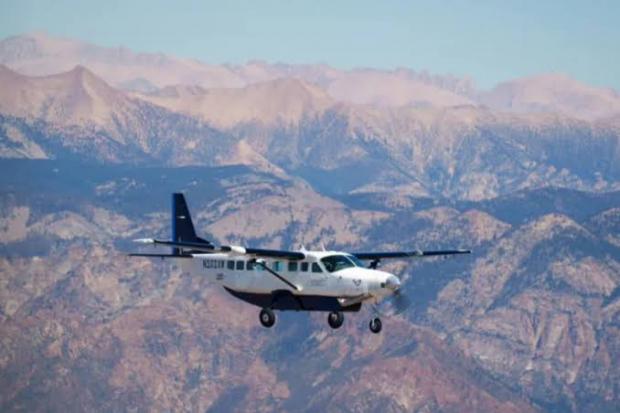
Manned with only an onboard safety pilot, the aircraft navigated 3,199 miles with no human control inputs as it finished its eastbound leg of a monthlong tour in the Outer Banks of North Carolina, Joby announced on Sept. 18.
The aircraft's first cross-country tour ended, coincidentally, near the Kitty Hawk monument, the site of the Wright brothers' first powered flight in 1903.
The converted Cessna Caravan was able to take off, navigate, land, and taxi under remote supervision from Joby's Santa Cruz, California, headquarters and Shaw Air Force Base in South Carolina, some 2,323 miles away.
"This journey across America offers a glimpse into a new era of aviation," Joby Aviation founder and CEO JoeBen Bevirt said in the announcement. "Autonomy has an important role to play in the future of flight, allowing us to connect remote communities, deliver critical supplies, respond faster to disasters, support military operations and keep pilots out of harm's way."
The aviation firm's Electric Skies Tour originated in Concord, California, departing from Buchanan Field Airport bound for Phoenix. From there, the self-guided aircraft traveled to Fort Worth, Texas, through Shaw Air Base in South Carolina to its destination in the Outer Banks, landing at Dare County Regional Airport.
"During the cross-country journey, the aircraft proved its ability to seamlessly integrate into high-density environments like Phoenix Deer Valley, one of the nation's busiest general aviation ports," the announcement noted.
The Joby plane was also able to remotely reroute around severe weather conditions in real time.
According to the report, the aircraft will begin its return westbound journey with stops including Raleigh, North Carolina; Washington; Louisville, Kentucky; Wichita, Kansas; Oklahoma City; Salt Lake City; and Portland, Oregon.
In a March blog, Robert Wilkos, co-founder of VIPJets.com, a private jet charter firm headquartered in Houston, expressed some concerns about the possibility of future pilotless flights.
Wilkos noted that moving accountability from "crew in cockpit" to "system plus remote supervision" shifts the liability and affects insurance. As a result, he believes that total "pilotless" aircraft for passenger business jets will remain a long-term objective.
He said single-pilot operations are a better choice since they incorporate human decision-making along with technology.
"If regulators and stakeholders demand extremely high evidence for airlines to reduce crew, you should assume the evidence bar will be high for passenger-carrying business aviation too, even if the equipment is technically capable," he said in the blog.
"Regulators are still showing caution about removing human redundancy, and industry resistance is visible."
Wilkos also noted the importance of certifications for such flights and believes programs such as Joby have highlighted that certification process.