










Breaking News
 "Begin Preparing Yourself..." - Jeffrey Sachs
 The 5-Year Treasury Just Broke 5%... The Whole Curve Is Next
 ICE Denounced for Enacting 'Official Government Policy of Disappearing People'
 Google Just Told Canadian Adults: Give Us Your ID and a Selfie Or Else…And It's Starting Now!!
Top Tech News
 Tesla Model 3 killer charges from 10 to 97% in just 9 minutes
 World-first unpowered DNA computer sets speed record
 I Power 5 Buildings Off-Grid. Here's How
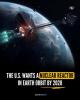 The US government is pushing hard to get a working nuclear fission reactor into space by late 2028
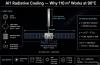 SpaceX Starmind AI in Space Radiator
 China Will Dominate Global Nuclear Energy Through 2035, Analyst Says
 These Absolutely Wild-Looking EVs Are Saudi Arabia's First Homegrown Cars
 BEYOND THE MOON: NASA plans a nuclear-powered fleet to push DEEPER into space
 Big Oil Backs Mazama's $135 Million Bet On Superhot Geothermal
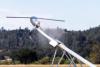 Quantum compass takes flight on Northrop's Lumberjack drone


WHO's High-Price Pandemic Plan
The recent release of Anthony Fauci's diaries, followed by his refusal to answer questions in an appearance before a US Senate committee by invoking the Fifth Amendment protection against self-incrimination 111 times, highlighted a stark divide in how the Covid pandemic was handled by public health authorities.
This is as true of Australia as of the US.
Repeatedly, against certainty expressed in public to justify official statements on the origins of the virus and on lockdown, mask, and vaccine policies, their private contemporaneous conversations confirm that even the top scientists were making decisions based on scientific uncertainty.
Consequently, one of the key legacies of the public-private gap is growing distrust of official claims. That scepticism should extend to the future pandemic agenda. We rely on the World Health Organisation to coordinate among countries to prevent scourges such as pandemics reaching our shores, or at least mitigate their effects. In doing so, we must defer to an army of international bureaucrats who work in such institutions. A deference that relies on trust.
Their salaries and careers depend on convincing us to part with more of our money to support their work. Yet, according to a new article on international pandemic financing in the Cambridge journal Health Economics, Policy and Law, the WHO and World Bank rely on dubious assumptions to calculate the return on investment case on which all major international efforts to mitigate future pandemics rely.
This should alarm governments. Mitigation is worth investing in, as pandemics will occur from time to time. But the article shows that current investments will have an overall detrimental effect on global health. Most starkly, it suggests a deep rot in the quality of institutions we rely on as stewards of this commonly accepted global good.
The WHO and World Bank report, produced at the request of the G20 in 2022, proposes an annual $31.1 billion budget for pandemic preparedness and prevention, about $10.5 billion of which would come through foreign aid (including Australia). About $26 billion would come from low and middle-income countries already struggling with economic issues including burgeoning Covid debt. For context, the entire WHO budget for 2024-25 was just $3.8 billion a year.
The point of the WHO and World Bank's argument is that if we spend such resources on preparing for pandemics, we will reap orders of magnitude greater return on investment down the road, more than a thousandfold in some wealthy countries – a bargain difficult to refuse if true.
The article from Leeds University shows that the financial arguments are based on smoke and mirrors. They rely on assumptions on the quality-adjusted life years lost to pandemics as against the big three global infectious diseases of HIV-AIDS, tuberculosis, and malaria; on the share of global funds to be devoted to pandemics in comparison to the other three per life saved in each case; and on the benefits to be gained from investments in vaccines and other pharmaceutical products instead of in the more basic determinants of health resilience in the population such as nutrition, sanitation, water, and hygiene. These are the factors, along with antibiotics and gains in medical advances, that have reduced the mortality toll from pandemics since the Spanish flu of 1918.
Furthermore, the WHO and World Bank also discount the adjustments made to human behaviour to mitigate health risks as they become obvious, collateral costs of the pandemic response measures, and the likely benefits of investing in those measures.
This matters because our government has signed on to the amended International Health Regulations, is expecting to sign the proposed WHO Pandemic Agreement, and looks set to sign a UN political agreement this September advocating for yet more money for the authors and beneficiaries of the growing pandemic industry. They are promising a lot of money based on the WHO's costings.