










Breaking News
 Evacuations begin as 'blockbuster' nor'easter barrels toward millions in 12 US states
 Trump's military prepares for Cuba as leaked Pentagon memo sends telling signal...
 Ford v. Hyundai: Henry Ford Must Be Turning In His Grave After New Report
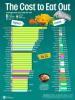 Switzerland Is Still The Most Expensive Place In The World To Eat Out
Top Tech News
 Tesla Model 3 killer charges from 10 to 97% in just 9 minutes
 World-first unpowered DNA computer sets speed record
 I Power 5 Buildings Off-Grid. Here's How
 The US government is pushing hard to get a working nuclear fission reactor into space by late 2028
 SpaceX Starmind AI in Space Radiator
 China Will Dominate Global Nuclear Energy Through 2035, Analyst Says
 These Absolutely Wild-Looking EVs Are Saudi Arabia's First Homegrown Cars
 BEYOND THE MOON: NASA plans a nuclear-powered fleet to push DEEPER into space
 Big Oil Backs Mazama's $135 Million Bet On Superhot Geothermal
 Quantum compass takes flight on Northrop's Lumberjack drone


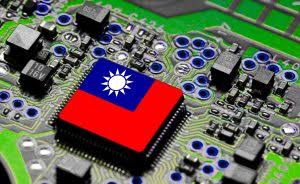
Taiwan's 'silicon shield' is in a race against time
When Donald Trump and Xi Jinping met in Washington on September 24, AI and Taiwan shared the agenda. Xi said AI should remain "under human control" and called for continued US-China dialogue on its risks and benefits.
On Taiwan, he urged Washington to "oppose Taiwan independence" and handle the issue "with caution." Trump, for his part, entered the summit having already rejected calls to slow the AI race: "Whoever wins AI, wins."
The pairing is revealing. One issue turns on speed, the other on stability. Washington and Beijing may build guardrails around AI and keep Taiwan Strait tensions manageable, but neither appears ready to relax the underlying competition.
Ahead of the summit, Washington had floated an AI incident-notification mechanism, but risk management is not the same as strategic restraint.
That distinction matters for Taiwan. The old "silicon shield" argument rested on scarcity: Taiwan's concentration of advanced semiconductor production made major conflict extraordinarily costly.
In the AI era, scarcity still matters, but time matters more. The question is no longer whether Taiwan's hardware ecosystem can be replicated elsewhere. It is whether it can be replaced fast enough while the US-China AI race continues and accelerates.
The debate over whether to "pace the frontier" underscores the dilemma. Slowing frontier development may buy time for safety work, but unilateral restraint risks ceding ground to the other side. And China is not standing still. Huawei is pushing its Ascend ecosystem and has unveiled the Atlas 960E SuperPoD as part of a broader effort to reduce dependence on US-controlled technology.
The phrase "mutually assured acceleration" has begun circulating in the AI safety debate. Unlike a nuclear arsenal, AI is also a commercial technology and productivity tool.