










Breaking News
 Evacuations begin as 'blockbuster' nor'easter barrels toward millions in 12 US states
 Trump's military prepares for Cuba as leaked Pentagon memo sends telling signal...
 Ford v. Hyundai: Henry Ford Must Be Turning In His Grave After New Report
 Switzerland Is Still The Most Expensive Place In The World To Eat Out
Top Tech News
 Tesla Model 3 killer charges from 10 to 97% in just 9 minutes
 World-first unpowered DNA computer sets speed record
 I Power 5 Buildings Off-Grid. Here's How
 The US government is pushing hard to get a working nuclear fission reactor into space by late 2028
 SpaceX Starmind AI in Space Radiator
 China Will Dominate Global Nuclear Energy Through 2035, Analyst Says
 These Absolutely Wild-Looking EVs Are Saudi Arabia's First Homegrown Cars
 BEYOND THE MOON: NASA plans a nuclear-powered fleet to push DEEPER into space
 Big Oil Backs Mazama's $135 Million Bet On Superhot Geothermal
 Quantum compass takes flight on Northrop's Lumberjack drone


How US and China can nimbly escape the Thucydides Trap
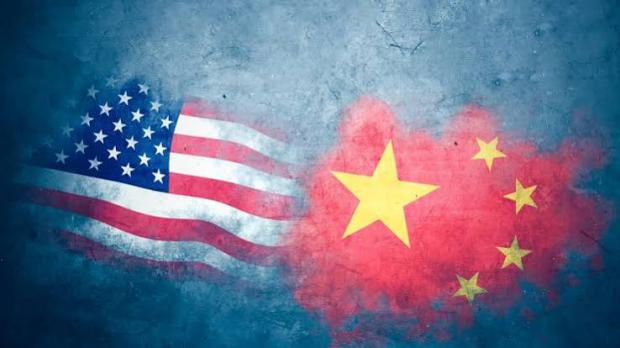
The most consequential sentence of Chinese President Xi Jinping's visit to Washington may also be the simplest: "The Thucydides Trap can be overcome."
This line, delivered during Xi's speech at the White House arrival ceremony, provides a better key to understanding the summit than the rich references to the history of US-China exchanges and the lavish language of mutual friendship.
The United States and China remain deeply divided over trade, artificial intelligence and geopolitical influence. The summit did not produce breakthroughs directly in those issues.
But what was proposed can set a constructive path for the two countries: two increasingly powerful and ambitious countries do not have to treat each other's national successes as an existential threats.
The central question in US-China relations is changing. It is no longer simply how to deal with China's rise. Much of that transformation has already occurred.
The harder question is whether Washington and Beijing can accommodate each other's ambitions without allowing structural rivalry to spiral into confrontation. That explains Xi's invocation of the "Thucydides Trap," an idea he also raised during Trump's visit to China in May.
The Thucydides Trap describes the danger that can emerge when a rising power confronts an established one, generating fear and strategic competition that can ultimately produce conflict. Xi's use of the phrase therefore addresses the structural problem underlying US-China competition.
China does not intend to abandon its pursuit of technological, industrial or geopolitical strength. The United States, under Trump, is equally explicit about restoring American industrial power, technological leadership and national influence. "Achieving the great rejuvenation of the Chinese nation and making America great again can go hand in hand," Xi stated.
This proposition carries greater weight today because China's position has changed. Chinese companies have become global leaders and exporters in electric vehicles, batteries, drones, telecommunications, renewable energy, electronics, robotics and increasingly artificial intelligence.
China also possesses considerable leverage in supply chains crucial to advanced manufacturing. The sensitivity of US officials to Chinese restrictions on critical minerals was evident ahead of the summit, including concerns over yttrium, which is important to aerospace and semiconductor manufacturing.