










Breaking News
 Evacuations begin as 'blockbuster' nor'easter barrels toward millions in 12 US states
 Trump's military prepares for Cuba as leaked Pentagon memo sends telling signal...
 Ford v. Hyundai: Henry Ford Must Be Turning In His Grave After New Report
 Switzerland Is Still The Most Expensive Place In The World To Eat Out
Top Tech News
 Tesla Model 3 killer charges from 10 to 97% in just 9 minutes
 World-first unpowered DNA computer sets speed record
 I Power 5 Buildings Off-Grid. Here's How
 The US government is pushing hard to get a working nuclear fission reactor into space by late 2028
 SpaceX Starmind AI in Space Radiator
 China Will Dominate Global Nuclear Energy Through 2035, Analyst Says
 These Absolutely Wild-Looking EVs Are Saudi Arabia's First Homegrown Cars
 BEYOND THE MOON: NASA plans a nuclear-powered fleet to push DEEPER into space
 Big Oil Backs Mazama's $135 Million Bet On Superhot Geothermal
 Quantum compass takes flight on Northrop's Lumberjack drone


Xi Came to Washington With Leverage. Washington Is Already Buying It Back
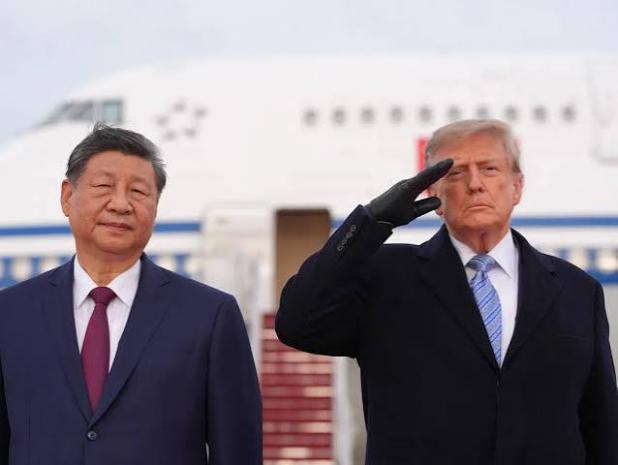
Trump almost never does that. He waits at the White House. And when Trump flew to Beijing in May, Xi did not come to the airport; a vice premier did. Yesterday the President of the United States stood on the tarmac for the man who holds something he needs.
Today Trump hosts Xi at the White House, the first state visit by a Chinese leader in more than a decade, followed by a state dinner tonight. By the time you read this, the two men will have spent several hours in a room together, and the wires will be parsing every word of the readout.
I want to tell you what to watch, and why the result does not change a single trade.
Start with what did not happen in the run-up. Before every previous meeting with Xi, Trump escalated. In 2019 he threatened tariffs on $300 billion of Chinese goods before Osaka. Before Busan last October he threatened a "massive increase" in tariffs and said there was no reason to meet at all. Before the Beijing summit in May he floated a 50% tariff over reports that China was sending air defense systems to Iran. This time, nothing. No tariff threats, no export bans, no leaked demands. And the President went to the airport. Reuters ran an analysis Monday on why the tone has changed, and the answer from every China expert they spoke to was the same: rare earths.
Last year Beijing curbed rare earth exports in retaliation for Trump's tariffs. It slowed licenses to a crawl and let American automakers and defense contractors find out what happens when a single input stops arriving. It did not have to cut supply to zero. It only had to show it could. The result, in the words of Peter Harrell, a White House economic official under Biden, is that the administration now "feels vulnerable to Chinese coercion" and is seeking "stability and secure access to critical minerals" above everything else.
Put simply, China turned a supply chain into a weapon, and it worked so well that the President of the United States walked into today's meeting with less leverage than the man across the table. That is the single most important fact about this summit, and almost nobody will say it that plainly.
Here is what is on the table. The rare earth truce from the Busan meeting last October, in which Trump cut tariffs by 10% and shelved export controls on thousands of Chinese companies in exchange for Xi suspending the restrictions and resuming soybean purchases, expires late this year. The U.S. Trade Representative said this week the two sides are still negotiating an extension. Beijing has said it is committed to "safe and stable" supply chains while reserving the right to screen anything dual-use, which is Beijing's way of saying the weapon stays loaded. The consensus from Bloomberg, Foreign Policy, and the China analysts is that both sides want an extension, neither wants a comprehensive deal, and China keeps its dominance of rare earth processing until at least 2030.
So the most likely outcome tonight is a limited extension with warm words. Relief without a resolution.